Communications and Outreach Processes
Assuming that, by the end of the symposium there is a story to be told the EMS seeks to translate ideas to actions using different means to reach different audiences including the public at large, opinion shapers, decision takers and policy makers. Outcomes can include questions as well as answers and the EMS has collaborated with other academic initiatives at Green Templeton College on issues that require additional research to provide a basis for sound policies.
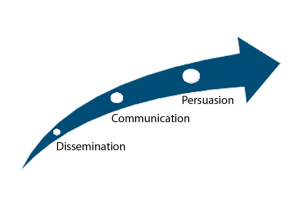 Dissemination
Immediately after each symposium (usually the next day) the EMS issues a Press Release. Necessarily brief, it focusses on selected highlights and is distributed worldwide. Over the next several weeks the EMS works with participants (on the basis of agreements reached with them before and during the symposium) on articles, OpEd pieces and letters to editors for print and on-line publication. Radio and television interviews and discussions, some recorded during the symposium (but not in sessions) are also used. All media engagements are listed on the press and media pages on the website.
Communication
The Reports on the first five symposia, incorporating participant comments on drafts were published on the EMS website several weeks after the symposium. Beginning in 2015, the EMS launched an updated website to amalgamate the information into a more easily digestible format with improved content, appearance and utility.
The Report and the new website have four audiences:
- The public at large.
- Students, researchers and academics with related interests.
- Journalists and others whose work helps to shape public opinion, particularly in emerging markets but also (because emerging market issues are global issues) in wealthy countries.
In light of this new effort to create the high-quality information provided by the Symposium in terminology comprehensive to the layman, the 2015, 2016 and 2017 reports took more time to produce, and maximized participant involvement in the drafting process, produced a more complete and more accessible publication and launched it in multiple locations (mainly in emerging markets). With keeping an increased participant and public engagement in mind, the 2015 and 2016 reports were launched in the House of Lords in London. Additionally, reports were produced and made available both in print and online in Arabic, Chinese, English, Portuguese, Russian and Spanish. You can read more about our engagement in the news section of our website.
Persuasion
Broadcast and targeted communications can increase awareness, shift priorities and stir support for action among policy makers as well as the public at large. But country and corporate policies rarely change on the basis of what policy makers read in reports or on the web. Almost invariably (except in institutions of global governance) top down policy change depends on decisions based on the persuasive adaptation of generic propositions to specific country or corporate conditions. Accordingly, all EMS recommendations have been addressed to specific categories of actors including governments (mainly in emerging markets), corporations, civil organizations and multilateral institutions.
After every symposium, participants have returned to their spheres of influence armed with findings and recommendations. They have used their access to the highest levels of national governments and multilateral institutions, global and local corporations, universities and global and national civil society organizations such as the WEF to realign mindsets, challenge prejudices, implant ideas, change priorities, explain how generic propositions crafted at the EMS can be adapted to country specific circumstances and urge political action.
As every teacher knows, persuasion is less about ‘eureka’ moments of enlightenment than drip-fed arguments that convince individuals, communities, corporations and nations to open and eventually change their minds. Social, economic, political and cultural transformations are invariably gradual: a process of repetition rather than convulsion. But the process can be more direct, particularly in multilateral institutions. For example:
- In December 2009 the EMS symposium on Health and Healthcare recommended multilateral action to address issues arising from the migration of healthcare professionals from emerging markets to wealthy countries. Six months later, participants in that symposium attended the WHO World Health Assembly in Geneva which adopted a Global Code of Practise on the International Recruitment of Health Personnel. It was not an EMS initiative but there is no doubt the EMS contributed to it.
- The business practices of a Sri Lankan corporation that helped its employees manage work, home and parenting commitments because it was good for employees, good for the company (staff retention and productivity and corporate image and reputation) and ultimately good for the nation were discussed at the symposium on Gender Inequality in 2013. As a direct result, several other major corporations (in different sectors) adapted and adopted similar measures and have in turn become exemplars.
Investigation
In some EMS symposia, participants have stopped short of a firm recommendation having recognized the need for research to provide a grounded basis for changing policies and practices. The EMS is not a research organization but collaborates with other Green Templeton initiatives on researchable issues. For example, after the Health and Healthcare symposium concluded that potentially valuable policy changes could not be implemented without additional evidence, the EMS partnered with another academic initiative of Green Templeton College and two emerging market institutions in a project to evaluate the feasibility of coordinating health and healthcare policies across government departments.