Organizing Principles
Purpose of the Emerging Markets Symposium
The EMS exists to bring together authoritative and influential leaders from emerging markets and wealthy countries to:
- Exchange knowledge and opinion on issues of human welfare in emerging markets.
- Reach grounded conclusions, findings and recommendations.
- Use their conclusions to educate the public at large and influence opinion shapers, decision takers and policy makers in emerging markets (and if appropriate other countries), multilateral institutions, national and international corporations and voluntary organizations to promote changes in policies and practices that would help resolve problems and capture opportunities to improve human welfare.
What the EMS means by ‘human welfare’
The EMS uses ‘human welfare’ as a shorthand term that encompasses human well-being (physical, psychological, emotional, social and economic); human development (as defined in UNDP’s Human Development Reports* and summarized in its Human Development Index**); human security (as described in the 2003 Report of the UN Commission on Human Security***); and aspects of human rights. As a catch-all term it is imprecise but nonetheless defines the concerns that drive the EMS.
The work of the EMS is grounded in the fact that because issues of human welfares are complex and interrelated they must be considered in:
- Holistic frameworks that link issues.
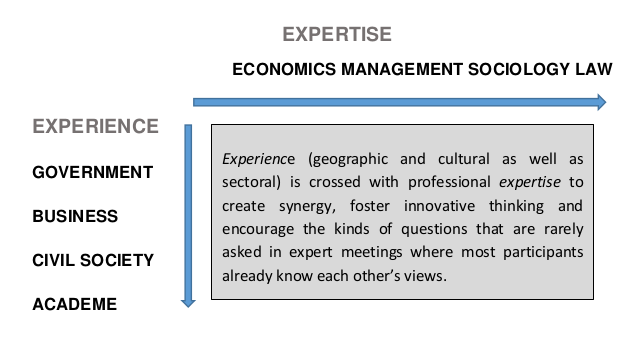
- Multidisciplinary, multi-sectoral and interactive forums in which complementary knowledge, expertise and experience is brought to bear on issues of common interest (see Expertise/Experience Matrix below).
- Secure and private conversations that allow participants to learn from others, allow others to learn from them and allow them to refine their own ideas.
Other determinants of human welfare
Human welfare is a function of health, educations, economic security and social security, each an outcome of complex interactions between:
- Demographic, economic and social policies;
- Decisions made by individuals, businesses and civil society organizations; and
- The human life course from birth through childhood, youth, adulthood and ageing to death.
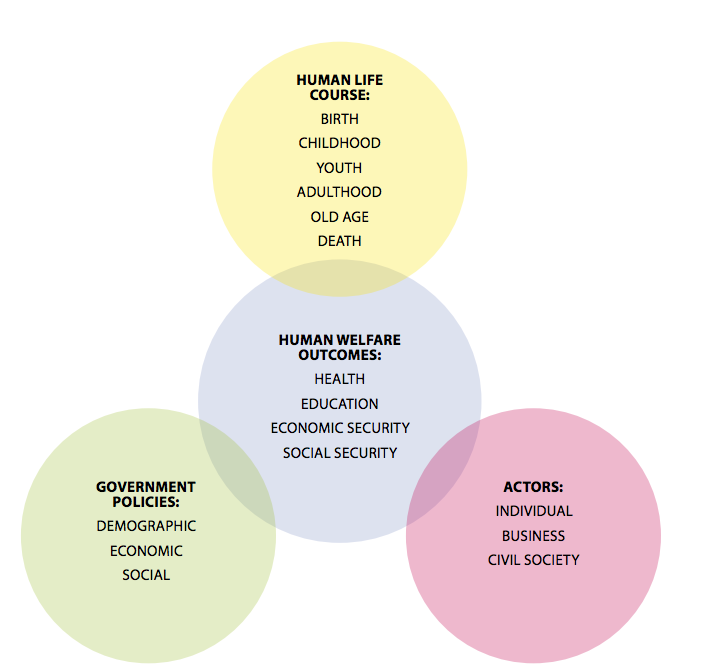
The determinants of welfare are interactive but not necessarily aligned.
The nine EMS symposia since 2008 have focused on aspects of the life course, aspects of policy and interventions and aspects of outcomes. The topics have included:
- Health and Healthcare in Emerging Market Countries (4-6 December 2009).
- Urbanization, Urban Health and Human Security in Emerging Markets (4-16 January 2011).
- Tertiary Education in Emerging Markets (13-15 January 2012).
- Gender Inequality in Emerging Markets (11-13 January 11-13 2013).
- Maternal and Child Health and Nutrition (9-12 January 2014).
- Ageing in Emerging Markets (15-18 January 2015).
- Young People and the Future of Emerging Markets (7-10 January 2016).
- Health and the Environment in Emerging Markets (12-15 January 2017).
- Migration and the Future of Emerging Markets (12-14 January 2018).
The topics were chosen on the basis of judgements about the ripeness, timeliness and (from emerging market perspectives) urgency of issues; how they were being addressed in other forums; and the readiness of the EMS to tackle them.
Design process
Once a topic has been chosen the designs of EMS symposia has been guided by a process that begins with a review of existing research and conversations with recognized authorities to define its scope and the relative priority of the questions it will seek to answer. The programme continues to develop as participants are selected and invited and help shape the agenda.
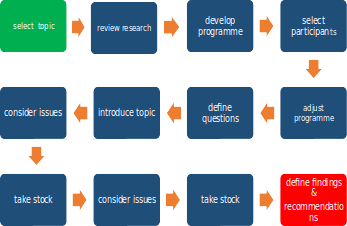
The first four symposia ran for two and a half days, the fifth and sixth and seventh a half day longer. Each began with a full-length lecture that surveyed the ground to be covered. Other sessions were conversational. The final sessions on the second and third days were panel discussions with active chairing in which participants, took stock of progress. The final panel produced outline findings and recommendations for subsequent refinement in the Report on the symposium.
*The EMS focusses on 20 emerging markets: Argentina, Brazil, Chile, China, Colombia, Egypt, India, Indonesia, Jordan, Malaysia, Mexico, Pakistan, Peru, Philippines, Poland, Russian Federation, South Africa, Thailand, Tunisia, Turkey
**See Sabina Alkire ‘Human Development: Definitions, Critiques, and Related Concepts’. OPHI Working Paper 36 and UNDP HDRO Background Paper 2010/01.
***A summary measure of average achievement in key dimensions of human development: including a long and healthy life, being knowledgeable and having a decent standard of living.