News
This page contains an archive of news articles from the Emerging Markets Symposium, published between 2015 and 2019.
13 February 2019
Update on Global Compact for Migration February 2019
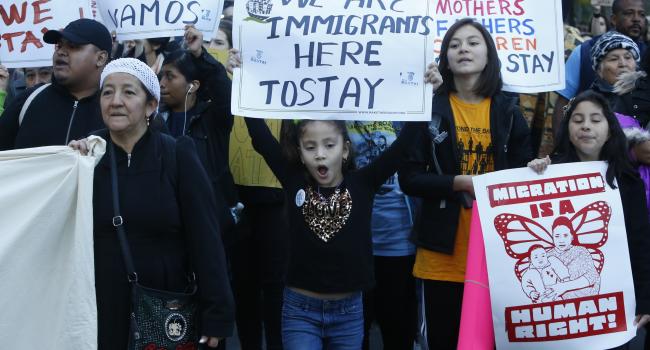
The symposium on Migration and the Future of Emerging Markets convened fifteen months after 194 countries approved the New York Declaration for Refugees and Migrants at the General Assembly in September 2016 and eleven months before the Global Compact for Migration was to be adopted in Marrakesh in December 2018.
The symposium applauded the Declaration, recognized the formidable difficulties of creating a collaborative framework for managing global migration and endorsed the broad objectives of the Compact. But after US withdrawal in December 2017, waning support for the Compact was confirmed at Marrakesh and at the General Assembly where it was endorsed by 152 countries and opposed by five (12 abstaining and 24 not voting).
This downhill trajectory invites questions about why, after a promising start, so many countries wavered between 2016 and 2018. There are no generic answers but there are threads of genuine and deliberate misunderstandings. Although the Compact reaffirmed “the sovereign right of States to determine their national migration policy” some countries decided its treatment of sovereignty was ambiguous. Some objected to a perceived call to sanction media criticism of migration policies and practices. Some were uncomfortable with blurred distinctions between refugees and migrants. Others questioned the perceived implication that migration is a human right.
Wicked problems are rarely solved in one pass and although the outcome was less than successful it was a step forward on a longer than expected road.
22 May 2018
EMS report on Global Migration and Emerging Markets published
Against the background of the facts that emerging markets are the world’s leading sources of international migrants, the largest beneficiaries of migrant remittances and the leading destinations of migrants who return to their birth countries, the ninth EMS symposium on human welfare in emerging markets in January 2018 focused on international migration. The report on the symposium, Global Migration and Emerging Markets has now been published.
Whilst recognizing the importance of internal migration within and of forced migration to and from emerging markets, the symposium concentrated on voluntary international migration from emerging markets to (mostly) wealthier receiving countries.
The report was designed as a contribution to the development of the Global Compact for Regular, Secure and Orderly Migration that will be considered at the Intergovernmental Conference on Migration in Morocco in December 2018. It has been submitted to Louise Arbour, the UN Special Representative for International Migration. To download the report, click here.
The report emphasizes that most emerging markets have been slow to create migration policies, incorporate migration in economic and social strategies, accept responsibility for migrant-nationals abroad and establish bilateral arrangements with migrant-receiving countries to facilitate successful experiences for migrant-nationals in receiving countries and their return to birth countries.
Just as most migrant source countries have been slow to adapt to the realities of international migration, most migrant receiving countries have struggled to reconcile their needs for secure borders, cohesive social fabrics and migrant skills with an enhanced appreciation of the importance of relationships between migration and development. Barriers to entry have been raised, already negative attitudes have hardened, migrant rights and access to healthcare, education, housing and social services have been restricted, chain migration has been curbed, employer abuses have been ignored and blind eyes have been turned to trafficking and slavery.
Globalization has been associated with increasing flows of international migrants but not with more effective or equitable governance of international migration. The attenuation/resolution of migration-related problems hinges on global cooperation which, in turn, hinges on policy changes by national leaders, changes in public attitudes and behaviours towards migrants in receiving countries and the development of coherent migration policies in emerging markets and other source countries.
As the global community wrestles with the task of reaching agreement on the Global Compact for Regular, Secure and Orderly Migration that will be considered in Marrakech in December 2018, it should bear in mind the words of former Pakistan Prime Minister and Chairman of the Emerging Markets Symposium H.E. Shaukat Aziz who, at the end of the symposium said:
“My generation excels at kicking cans down the road to be picked up by our children and grandchildren. A year ago, at our symposium on environmental health, we acknowledged that our successors will inherit the consequences of our environmental irresponsibility. We must now commit to persuading the world to grapple urgently with migration-related issues. And we must start in Marrakech.”
For more information about the symposium and the report go to the Migration and the Future of Emerging Markets.
24 January 2018
Emerging Markets on the Move: Press release from 2018 Symposium
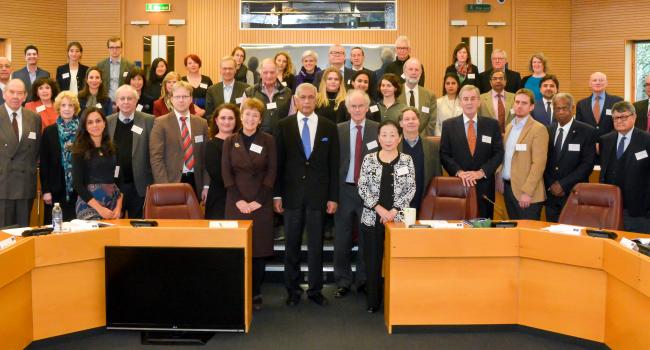
The 2018 symposium on Migration and the Future of Emerging Markets at Green Templeton College, Oxford has issued its conclusions and recommendations in a press release (30 January 2018).
Commentators often overlook the fact that Brazil, China, India, Indonesia, Mexico, Russia, South Africa, Turkey and a dozen other emerging markets in Asia, Europe and Latin America are major sources of international migrants (India, Mexico, Russia and China alone accounting for more than 40 million). They also overlook the facts that emerging markets are the main destinations of migrants returning from wealthier countries, the main beneficiaries of migrant remittances (nearly $450 billion in 2015) and major players in debates on global migration
Closing the symposium, former Pakistan Prime Minister and Chairman of the Emerging Markets Symposium H.E. Shaukat Aziz said: “My generation excels at kicking cans down the road to be picked up by our children and grandchildren. A year ago, we acknowledged our children would inherit the consequences of our environmental ineptitude. Here, now, we must commit to helping persuade the world to grapple with migration-related issues and we must start in Marrakech.”
The press release from the symposium recommends that emerging markets should endorse the Global Compact for Migration at Marrakech, Morocco in December 2018. Grounded in the UN’s New York Declaration on Refugees and Migration of September 2016, the Compact (which has received less global attention than merited by its potential significance) will, if adopted, provide the world’s first (non-binding) framework for safe, orderly and regular migration.
The outcomes of the Emerging Markets Symposium on Migration and the Future of Emerging Markets will be presented to the United Nations in February. A report proposing actions for consideration by governments, business and civil society will be published later this year.
To read the full press release click here.
8 January 2018
EMS Panel Discussion announced for 12 January 2018 on the Global Compact on Migration and Refugees
The panel discussion will take place on Friday 12 January 2018, 18.00 – 19.15 at the Oxford Centre for Islamic Studies. The panel speakers are Tsung-Mei Cheng, Co-founder, the Princeton Conference, Michelle Leighton, Chief, Labour Migration Branch, International Labour Organization and Rainer Műnz, Special Adviser on Migration and Refugees, European Union.
This event is open to members of the University by registration only.
Human migration is a defining theme of the 21st century: three-quarters of a billion migrants live in their birth countries; almost a quarter of a billion migrants live outside them; sixty five million people are internationally and internally displaced; twenty three million refugees are under UNHCR or UNWRA protection.
On 3 December 2017, the USA withdrew from the Global Compact for Migration because it was deemed incompatible with US immigration policies and national sovereignty. It did not withdraw from the Global Compact on Refugees. Both compacts are grounded in decades of preparation. The Compacts on Migration (shaken but not broken by US withdrawal) and the Compact on Refugees are the most important efforts, ever, to grapple with uncommonly critical, intransigent and wicked problems (see http://refugeesmigrants.un.org/migration-compact and http://refugeesmigrants.un.org/refugees-compact). The compacts, that will be considered by the UN General Assembly in September 2018, will not fully resolve the issues they address. But, like the Paris Agreement on Climate Change (December 2015), they will offer a framework for multilateral action.
The EMS Panel Discussion on 12 January 2018 will be authoritative, informative and provocative. It will raise relatively benign (what is the nature and purpose of the compacts?) and neuralgic questions: what is at stake; what are the constraints; what could happen if the compacts are adopted; what will happen if the world neglects the opportunities they present?
22 September 2017
EMS report on Environmental Health covered in over 20 countries

The EMS report on Environmental Health in Emerging Markets was launched on 6 July. The main messages in the report have received media coverage in over 20 countries including major emerging market countries such as Brazil, China, India and Pakistan. Highlights of media coverage and other outreach included:
- Placement of a Project Syndicate op-ed authored by EMS Chair HE Shaukat Aziz on The Health Costs of Environmental Change in multiple outlets worldwide including in Asia, the Middle East, sub-Saharan Africa, Central America and the US
- Publication of the a letter signed by 12 EMS participants in the 6 July edition of The Times and included on their online site
- Article in the Folha de Sao Paulo, the highest circulation newspaper in Brazil and interview with the EMS Executive Director, Ian Scott, on CBN, a radio network with one of the highest market penetrations in Brazil as well as other outlets nationally
- Articles in the print and on-line versions of The News International in Pakistan, the widest-read English language newspaper in the country
- Pick up by several outlets in China including Caixin, the country’s most influential independent financial media group and Today China News, the leading Chinese business website
- A feature including an interview with the EMS Executive Director, Ian Scott, was included in the Harvard T H Chan School of Public Health’s podcast, This Week in Health.
Links to all the media coverage can be found here. by following this link .
5 July 2017
Environmental Health in Emerging Markets full report and translated summaries launched 6 July 2017 and now available
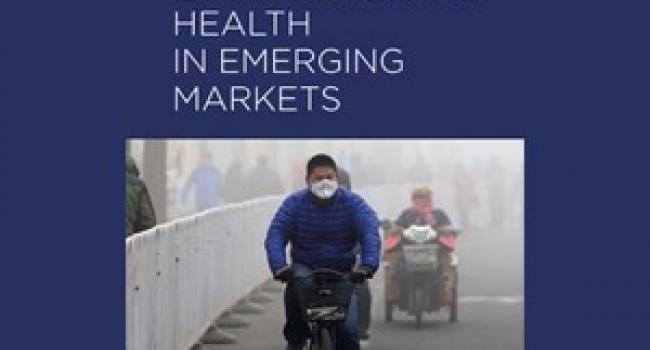
World’s leading experts warn of irreversible environmental destruction and disastrous economic and health consequences of unregulated economic ambition
Unbridled economic growth in many leading economies will have disastrous economic and social consequences and lead to irreversible environmental destruction, a group of global experts warns.
As heads of state gather for the start of the G20 meeting in Hamburg, the expert group calls on world leaders to put human wellbeing before unregulated economic ambition, noting that the relentless pursuit of economic growth is undermining not only the environment but also the very prosperity and benefits it aims to achieve in many countries, not least in emerging markets.
The group states that while rapid economic growth has generated unprecedented improvements in human welfare in recent decades, many policies that continue to maximise growth without enforcing environmental controls are now reaching a point of diminishing social returns.
The report argues that decision-makers have often been more concerned about the cost of interventions to limit environmental damage, seen to hurt business and growth, than about the price tag associated with not doing what is needed.
To read the full report and translated summaries, please click on the link below.
Full report and translated summaries
To read the press release in 7 languages, please click on the link below.
27 June 2017
Ian Scott, Executive Director of EMS, presents Health and the Environment symposium conclusions in Moscow

Ian Scott, Associate Fellow of Green Templeton College and Executive Director of the Emerging Markets Symposium, was invited to speak at the First Congress of The Assembly of Eurasia’s Peoples in Moscow in late May.
He spoke about the conclusions and recommendations of the EMS symposium on Health and the Environment in Emerging Markets held in January 2017. These sessions were chaired by Vladimir Zakharov, Director of the Institute of Sustainable Development and President of the Center for Russian Environmental Policy who participated in the EMS symposium. The Congress covered a broad range of economic, social and environmental issues and was attended by more than 1500 representatives of Eurasian countries. The sessions on the environment were notable for strong agreement on the need for urgent action to attenuate the consequences of damage to natural systems and on the roles of states, businesses and civil societies.
17 January 2017
Emerging Markets Symposium Lecture on Health and the Environment given by Jeffrey Sachs
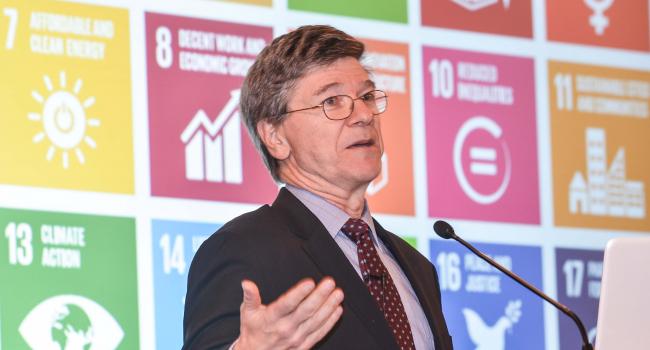
Speaking to an audience of 300 people at the Emerging Markets Symposium on Health and the Environment Lecture in the Sheldonian Theatre, world-leading American economist who specialises in sustainable development, Professor Jeffrey Sachs, drew on President Kennedy’s announcement that he would take a man to the moon, and back, as a goal for his administration.
Professor Sachs said the world of environmental and public health had many successes to its name, but there was an increasing disconnect between public rhetoric and action discourse.
This meant that it now also needed to ‘moon shot’ – a bold goal with appropriate timelines and the accompanying determination and resources to succeed.
He concluded by highlighting the 17 UN sustainable development goals and said we have the framework, now we need to create the leadership and commitment to reverse the avoidable global health inequities within and between countries and destruction of our planet.
The following day, Professor Sachs was interviewed on the Today programme about his views on Donald Trump’s economic goals.
9 January 2017
Jeffrey Sachs will deliver EMS Special Lecture

Jeffrey Sachs, University Professor, Quetelet Professor of Sustainable Development and Professor of Health Policy and Management at Columbia University will deliver a lecture on Friday 13 January, 6pm, at the Sheldonian Theatre, Oxford, on the 2017 EMS theme of Health and the Environment in Emerging Markets. Professor Sachs is the recipient of numerous awards and honours, a prolific author and journalist and is widely regarded as one of the world’s most influential authorities on relationships between health and the natural and built environments.
Professor Sachs will speak on The Path of Sustainable Development for the Emerging Economies.
This event is open to members of the University by registration only.
1 August 2016
Translated copies of Young People and the Future of Emerging Markets Summary Report now available

We’re pleased to announce that translated versions of the Young People and the Future of Emerging Markets: Summary and Recommendations Report are now available for download in PDF form below.
تحميل تقرير العربية (Download Arabic Report)
下载中国报告 (Download Chinese Report)
Download English Report
Baixar relatório Português (Download Portuguese Report)
Скачать русский доклад (Download Russian Report)
Descargar el informe en español (Download Spanish Report)
Read more about the 2016 Symposium, Young People and the Future of Emerging Markets, at the link here.
30 July 2016
2017 Emerging Markets Symposium topic announced

The Emerging Markets Symposium (EMS) was established in 2008 to consider solutions to ‘wicked’ problems of human welfare in emerging markets*. The problems are complex, defy easy answers but demand attention because they menace growth, cohesion and stability in countries that will play disproportionately large roles in shaping the world in the 21st century.
Over the last eight years the EMS agenda has been forged at the nexus of (i) Topical (e.g. discrimination, inequity, governance) and sectoral (e.g. health, nutrition, education) issues; and (ii) The human life-course (children, young people, adults and the elderly).
The eighth symposium, in January 2017, ‘Health and Environment in Emerging Markets’, will be devoted to the impact of environmental pollution, depletion and degradation on human health in emerging markets and how it could be attenuated or reversed.
Most major morbidities and a quarter of the global disease burden are associated with environmental risks that are disproportionately concentrated in emerging markets. They are also concentrated in the zero to five age cohort for which the loss of healthy life years associated with environmental hazards is five times greater than for emerging market populations as a whole.
The 2017 symposium will explore relationships between demographic, health, education, economic and social policies and decisions made by/for individuals, businesses and civil society organizations during the human life-course. It will be grounded in a conceptual matrix featuring relationships between: (A) Chronic and communicable diseases and (B) Elements of the natural (i.e. land, air, water, climate, life) and built environments.
You can find the full list of previous symposia and a link to download summary report PDFs here.
To find out more about the Emerging Markets Symposium’s mission, please click here.
*The EMS focusses on 20 emerging markets: Argentina, Brazil, Chile, China, Colombia, Egypt, India, Indonesia, Jordan, Malaysia, Mexico, Pakistan, Peru, Philippines, Poland, Russian Federation, South Africa, Thailand, Tunisia, Turkey
4 July 2016
EMS Executive Director and EMS participants address the Global Youth Forum 2016 at the World Bank
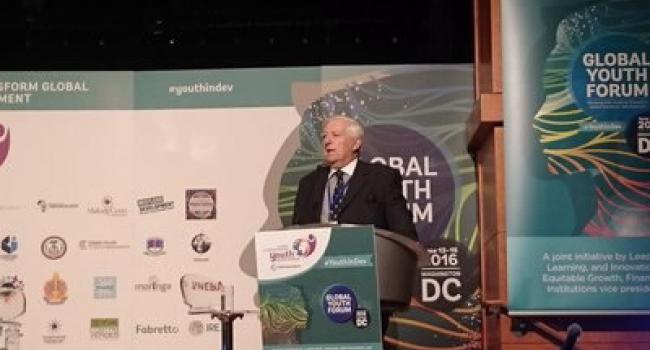
Ian Scott, the Emerging Markets Symposium’s Executive Director, and EMS participants Jo Boyden and George Patton all spoke at the Global Youth Forum, 13-15 June 2016 in Washington, D.C.. The Global Youth Forum is organised by The World Bank Group to move the youth agenda forward by building a sustainable Global Partnership for Youth in Development, comprising entrepreneurs, business leaders, policymakers, and civil society organizations who understand that young people are central to the development process.
George Patton spoke on the panel discussing youth and health, choices and risks, on day one of the Forum. His speech focussed on the importance of adolescent health and development.
Jo Boyden gave the first keynote address on day two of the Forum, speaking about the ‘threshold of adolescence’ and the need for more investment in youth – particularly in youth education.
Ian Scott gave the afternoon keynote address on day two, which focussed on the findings and recommendations from the EMS in January 2016 on Young People and the Future of Emerging Markets, which were published on 24 May. The full report can be downloaded here.
26 May 2016
Young People and the Future of Emerging Markets report launched at the House of Lords in London
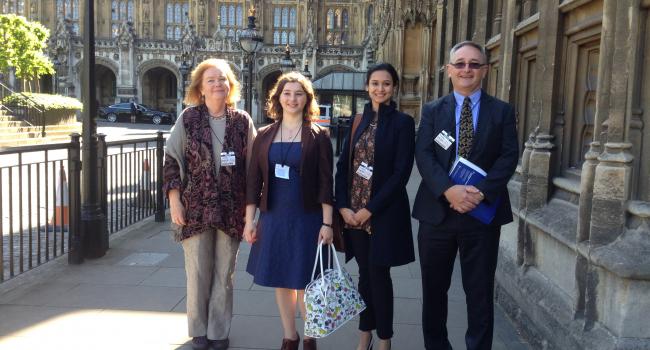
This year’s Emerging Markets Symposium report, Young People and the Future of Emerging Markets, was launched in the House of Lords, London, on Tuesday 24 May, 2016. The report urges emerging market country governments to address the specific needs of these young people in order to sustain economic growth, social cohesion and political stability.
The keynote speakers were Professor George Patton of the University of Melbourne, Chair of the Lancet Commission on Adolescent Health and Wellbeing, and Professor Jo Boyden of Oxford University’s International Development Department who directs the Young Lives research centre. Professor Patton pressed the case for “joined-up government policy” to invest in young people who he described as “the most creative age group across the life course”. Both speakers saw the EMS report as a wake-up call for emerging market countries to recognise the hugely positive potential of the younger generation. This was echoed by DPhil students Mihika Chatterjee and Irina Fedorenko, from India and Russia respectively, who highlighted the striking levels of youth activism in emerging countries.
The subsequent discussion, chaired by Baroness Goudie, ranged over appropriate models of education, the salience of the informal sector in emerging economies and the scope for the promotion of young entrepreneurs. Summing up on the value of cross-disciplinary dialogue, Green Templeton College Principal Denise Lievesley identified the key question as how to create an environment in which young people are empowered.
The Emerging Markets Symposium is generously sponsored by the C& C Alpha Group.
20 May 2016
New report from the EMS on Young People and the Future of Emerging Markets to be launched 24 May in the House of Lords, London

The latest EMS report, Young People and the Future of Emerging Markets, will be launched on 24 May in the House of Lords, London.
Speakers will include Professor Jo Boyden, Director of Oxford University’s Young Lives Research Centre and George Patton, Professorial Fellow in Adolescent Health Research at the University of Melbourne and Chair of the Lancet Commission on the Health and Wellbeing of Young People. The event will be chaired by Baroness Goudie. To download the full report, go to the Young People and the Future of Emerging Markets.
Click here to read the press release.
14 January 2016
EMS Symposium Urges Investment in Youth

40 leading international experts were joined by a dozen young graduate students from Green Templeton College for the seventh annual EMS symposium which this year (7- 10 January) focused on Young People and the Future of Emerging Markets. Specialists in demography, education, economics, health and social care amassed evidence of the phenomenal scale and challenges of the ‘youth bulge’ in emerging market countries, urging that the historically unprecedented demographic dividend was not squandered. For this a raft of radical new measures was required particularly in the fields of education, healthcare and employment where government, business and civil society needed fresh thinking on harnessing young people’s energies and communication skills. The symposium concluded that above all young people should be extended more meaningful participation in civic and political life as they were the future of emerging markets.
To read the press release click here.
22 December 2015
Brazil launch of EMS report on Ageing in Emerging Markets at the International Longevity Global Alliance
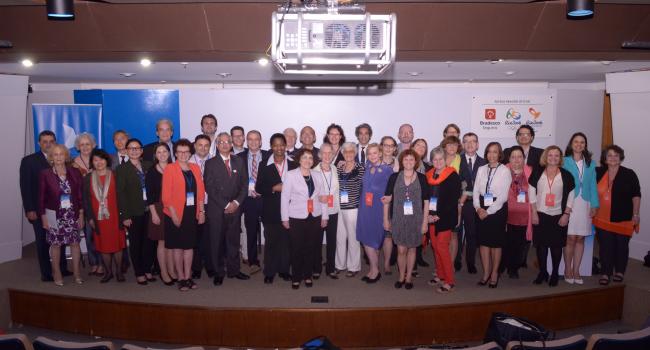
The Third International Longevity Forum organized by the International Longevity Global Alliance and hosted by the International Longevity Centre, Brazil, took place in Rio de Janeiro on 21 and 22 October 2015.
The conference was attended by representatives of ILGA centres around the world including the conference organizer EMS Steering Committee member Alex Kalache and Baroness Greengross, President of ILCUK both of whom had participated in the symposium on Ageing in Emerging Markets in January 2015.
The conference programme included the Brazil launch of the EMS report on Ageing in Emerging Markets in a presentation by EMS Executive Director Ian Scott.
3 December 2015
Ageing in Emerging Markets – summary and conclusions now available available in Arabic, Chinese, Russian, Spanish and Portuguese
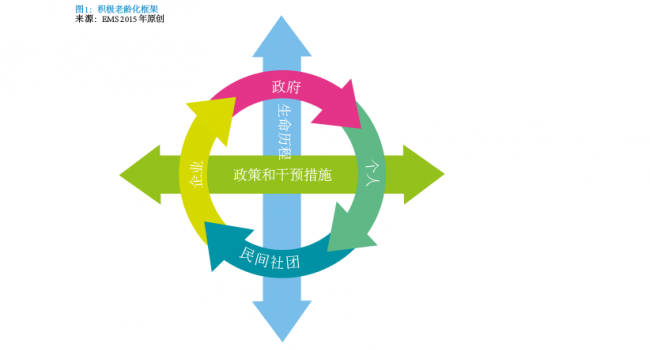
The EMS has published the Summary and Conclusions from the Symposium on Ageing in Emerging Markets in Arabic, Chinese, English, Russian, Spanish and Portuguese and are now available on this website.
The summary and conclusions have been transmitted to heads of Government/Heads of State in emerging markets and to political leaders, business leaders and leaders in civil society around the world.
The process of launching the Report around the world has continued with launch events now held in Prague, Rio de Janeiro, Malta and Vienna.
3 December 2015
Czech launch of EMS Ageing report in Prague
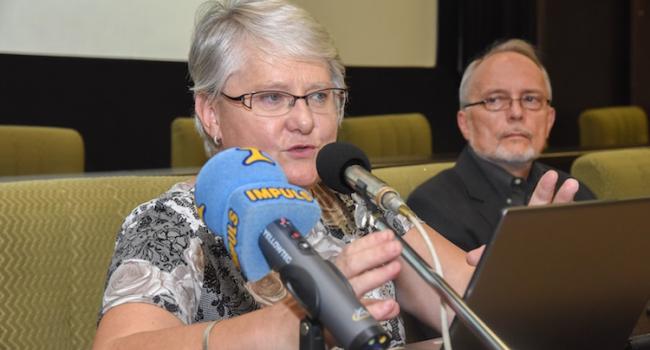
In the first of a series of regional launches around the world, the EMS Ageing in Emerging Markets report was the focus of a special session at the Ageing and Alzheimers conference held in Prague on 17 August. The main speaker at the event, which was organised by Prof Iva Holmerova, Professor of Gerontology at Charles University, was Alexandre Sidorenko, former Head of the UN Programme on Ageing. Other speakers to the audience of journalists and senior civil servants were Prof Juraskova and Dr Bures from the board of the Czech Society of Gerontology and Geriatrics. Interviews with the main speakers were carried on Czech TV and on various radio stations.
30 June 2015
New report from the EMS on Ageing in Emerging Markets launched 30 June in the House of Lords, London
A new report, Ageing in Emerging Markets, from the Emerging Markets Symposium at Green Templeton College was launched on 30 June in the House of Lords, London. The launch was hosted by Baroness Goudie, a regular EMS participant. The speakers included Sir John Grimley Evans, Emeritus Professor of Clinical Geratology, University of Oxford, Dr Alexandre Kalache, Co-President, Global Alliance of International Longevity Centres and Dr Alexandre Sidorenko, Former Head, United Nations Programme on Ageing. To download the full report, go to the Ageing in Emerging Markets. Click here to read the press release.
10 June 2015
Young People and the Future of Emerging Markets announced as subject for EMS 2016
The Emerging Markets Symposium in January 2016 will focus on Young People and the Future of Emerging Markets. Previous symposia on Maternal and Child Health (2014) and Ageing (2015) have addressed challenges and opportunities associated with the beginning and the end of the life course. The next symposium will focus on complex, urgent yet largely neglected issues associated with another critical phase of life. The symposium will explore headline issues of poverty, inequality, unemployment, disjunctions between education and labour markets, alienation and political unrest. It will also explore stories behind the headlines such as the impact of changing family structures on young lives, the effects of urbanization and the consequences of external migration. These issues are not unique to emerging markets but nowhere else do they occur on a comparable scale, evolve at comparable speeds or have a more critical bearing on the future.
10 June 2015
Emerging Markets Symposium launches new website
The Emerging Markets Symposium launched its new look website on 15 June 2015. The website covers all previous symposia together with new material on human welfare in emerging markets and the principles which underpin the EMS initiative. The findings and recommendations on Health and Healthcare, Urbanization, Tertiary Education, Gender Inequality, and Maternal and Child Health and Nutrition can now all be downloadable in PDF format from the new publications page.