Templeton Education and Charity Trust 2022-23
Templeton Education and Charity Trust (TECT)-funded activities are central to supporting the college activities of management students and fellows.
This aligns with the aims of the Templeton Education and Charity Trust ‘to advance education in business management’ as well as the Charter of the college ‘to further study, learning, education and research within the university and to be a college wherein men and women may carry out advanced study or research particularly in management studies’. Governing Body Fellow Richard Cuthbertson thanks TECT for their support.
Funding supported a range of activities during 2022-23
Kamila Nigmatulina (DPhil Management Studies, 2015)
 ‘I successfully completed my DPhil in management science in October 2023. My research focused on the emergence and early growth of the UK’s first financial technology (FinTech) companies. I looked at the role of regulation, policymaking, and other institutional actors in the collective process of helping technological innovations happen.
‘I based my research on qualitative methods using interviews (over 100) and participant observations as the primary data sources. These allowed me to contribute to management science theories and our knowledge of FinTech and related technological innovations. Moreover, I got a chance to meet and interview many interesting and inspiring people.
‘I want to thank the Templeton Education and Charity Trust for their help and support.’
Francois Bares (DPhil Finance, 2022)
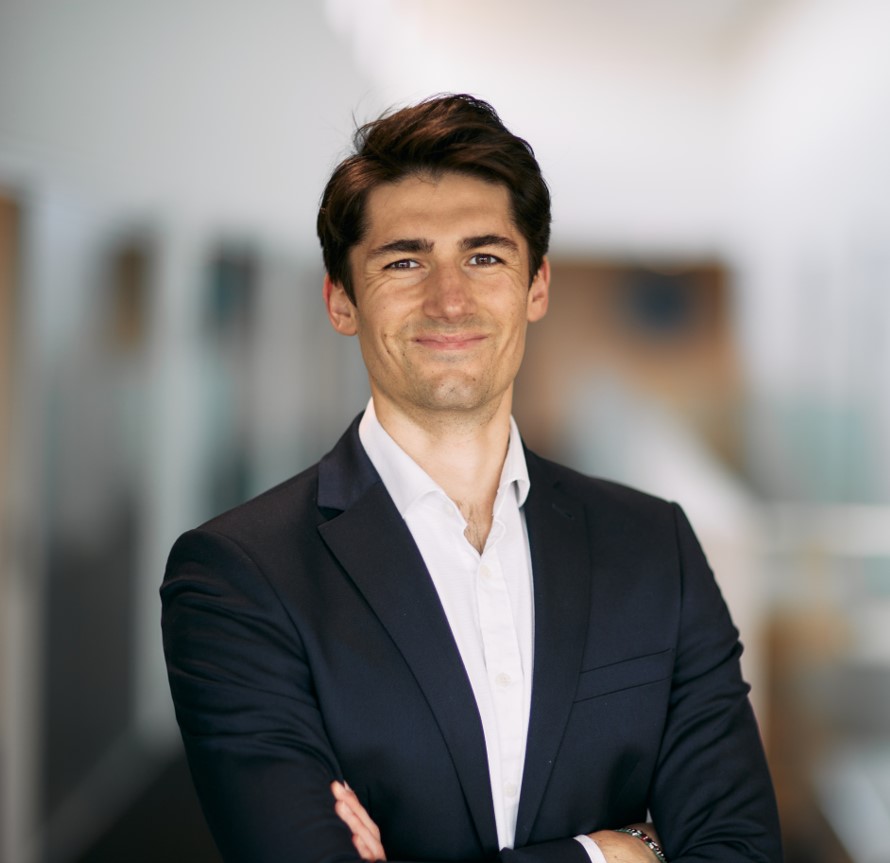 ‘I am an economist by training. I work on the economics of science. I examine the impact of public research fund distribution on scientific output: How should public funds be distributed across research fields? Should fundamental research be prioritised over applied research?
‘For example, in the 1970s in the United States, cancer research was heavily funded over other medical areas. What are the immediate and future effects of such choices on
- research productions
- researcher supply
- research team formation in the effected disciplines?
‘Conversely, what would be the optimal funding strategy to expedite a breakthrough in a particular field like battery technology? What determines the scientific community’s ability to quickly tackle sudden challenges, like finding a COVID-19 vaccine? Investigating these questions necessitates advances in modelling and measurement of scientific output, as well as extensive data connecting records on grants, scientific publications, and patents at scale. I am very grateful to the TECT trustees who have given me the opportunity to explore this important topic.’
Alfie Jackson (DPhil Management, 2021)
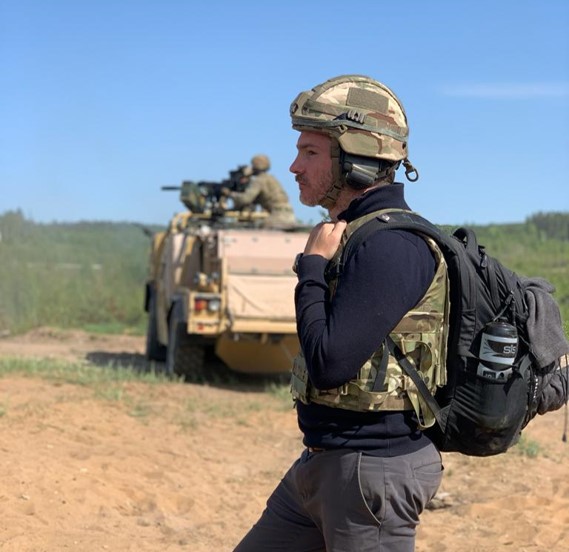 ‘I research organisational learning and change in extreme contexts of high risk and ambiguity. To that end I have been working with the UK Royal Marines to understand how they manage this tension between wanting to trial and experiment whilst also retaining world leading capability in a range of fields.
‘To gain this insight I embedded with a commando unit during a 6-month period, spending 3-4 days a week with them on base for four months before joining them for a 2-month deployment about HMS Albion for a series of NATO exercises in the Baltic sea.
‘Working with the ground level marines (i.e. not senior officers) was essential in understanding how top-level change impact the ground level troops and vice versa. Spending 6 months with an elite unit of UK military has been an incredible experience, both from an academic and personal standpoint. It is one that few civilians will ever have and one that would not have been possible without the generous support of the trustees of TECT.’
Victor Salenius (DPhil Management, 2020)
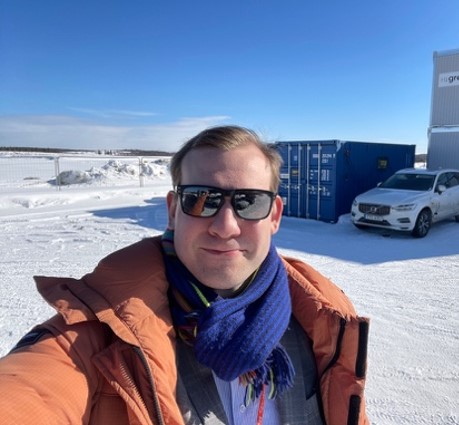 ‘I am very grateful to the Templeton Education and Charity Trust for their generous support of my DPhil research, without which I would not have been able to progress and be on track with my full-time empirical fieldwork and theory writing.
‘In the past year, I have undertaken empirical research into the innovation processes surrounding the transformation of traditional industries toward sustainability and carbon neutrality. More specifically, I have been able to conduct interviews with key stakeholders who are pioneering innovation around carbon-free hydrogen and steel supply chains. These are energy-intensive technologies that the world direly needs to see commercialized at a large scale in the upcoming decade as part of the fight against climate change.
‘I have also undertaken fieldwork visits where these industry supply chains are located and been able to study first-hand the local community networks and business support structures that are contributing to successful progress in these greenfield investments and innovation projects. Understanding the local enablers of innovation will be a crucial cornerstone especially in the context of sustainability transitions. In the past year, I have been able to present some emerging findings both at academic conferences and industry events.’
Neroli Austin (DPhil Finance, 2016)
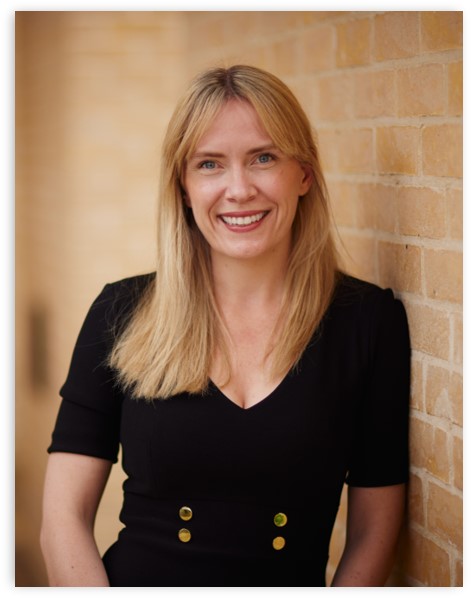 ‘I am an Assistant Professor in Finance at the Ross School of Business at the University of Michigan. I finished my DPhil from Oxford in June 2023. I am currently researching the impact of institutional investment in real estate on the gentrification of neighbourhoods. I was extremely grateful for the TECT Research grant in the final year of my studies because it enabled me to present to some of the leading academics in my field and receive substantive feedback on my work.’
Karl Overdick (DPhil Management, 2018)
 ‘I am a DPhil Candidate in Management Studies. I am extremely grateful for the TECT funding. It has allowed me to visit several leading conferences, attend two summer schools on research methods and it supported my research on wellbeing in the workplace.
‘It was crucial in enabling me to land my current job as an academic at the University of Leiden.’
Rebecca Keeley (MBA, 2022)
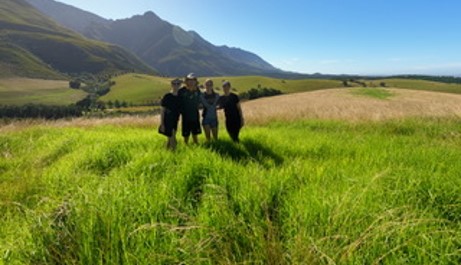 ‘With the support of the Templeton Education and Charity Trust I was able to travel to Cape Town, South Africa to understand the unique challenges faced by doing business in the South African context.
‘I found this course particularly helpful as I have spent many years working in healthcare in remote First Nations communities in geographically isolated parts of Australia, and there are several comparable features between working in these communities and those faced in Cape Town. I particularly appreciated the opportunities to have open discussion about the impact of culture on business, and the balance that hangs delicately at times with several social & political influences at play.
‘I would not have been able to experience this opportunity without the support of Green Templeton and I am immensely grateful.’
Ryan Caplin (MBA, 2022)
 ‘After completing my MBA, I moved to Nairobi, Kenya to work as a New Venture Consultant at The Sanergy Collaborative. Sanergy is a social enterprise focused on delivering sustainable, circular solutions to the sanitation and waste crisis. I am leading efforts to expand our waste sourcing and logistics services, to enable other waste-to-value companies to rapidly scale production and reduce organic waste in Kenya.
‘I am grateful to have gone to South Africa for the Doing Business in Africa elective. The experience was eye-opening, educational, and absolutely beautiful! Having lived in Ghana in 2018 and spending last summer in Kenya for my MSc thesis research, the visit to South Africa was a valuable view into another region of Sub-Saharan Africa and the unique challenges and opportunities there. The added perspective has directly benefited my work at Sanergy.
‘Thank you for enabling such a meaningful experience, which adds to my desire to continue my personal mission of helping to eliminate waste pollution in the world.’
Obanor Chukwuwezam (MBA, 2022)
 ‘The TECT grant made it possible for me to visit Japan on a trek with MBA Classmates. This trek allowed me visit various parts of Japan including Tokyo (the economic centre of Japan), Kyoto, Hiroshima (including the Hiroshima memorial centre) and Osaka.
‘During the trek, I had the opportunity to experience the Japan bullet train service which had been extensively covered in a case study during the Tech & Ops course as an example of operational excellence in a public service. I was also able to visit the Hiroshima memorial centre where I got to speak with the oldest living survival of the Hiroshima bombing and learn about the experience of the city and its survivors, and the need to work to promote peace across the globe which is particularly relevant given the current geopolitical climate. I also got the chance to visit a few businesses, experience the culture and food in Japan
‘The Japan trek was personal impactful for me and one of the highlights of my MBA program. I’m extremely grateful to TECT for making it possible.’
Ken Deng (DPhil Finance, 2020)
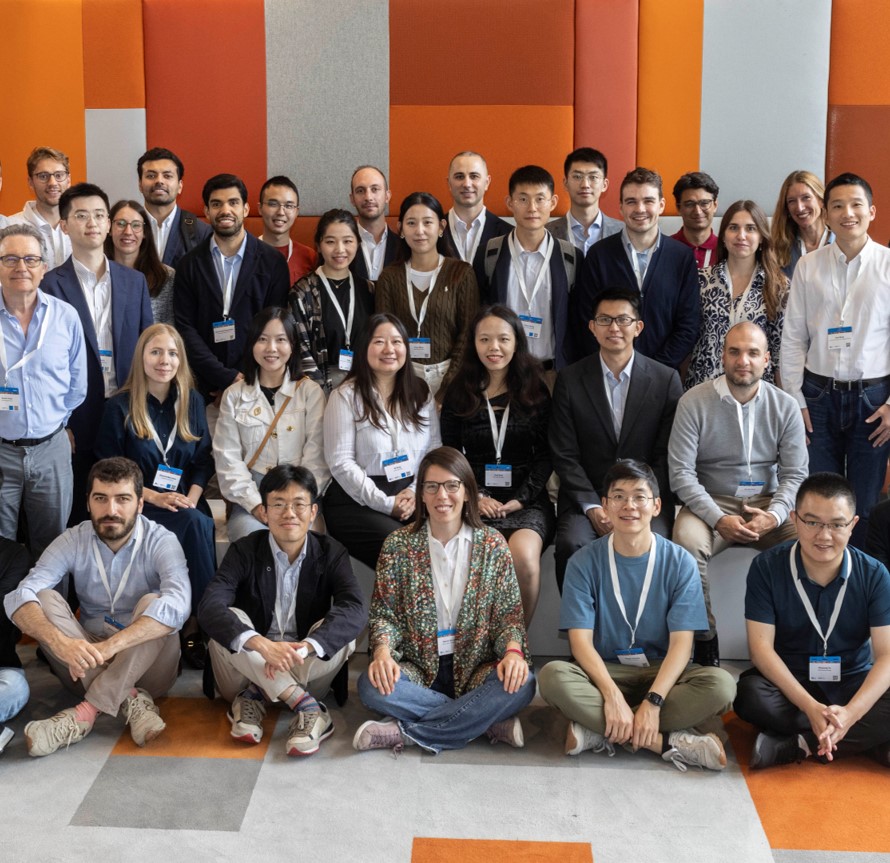 ‘The TECT research grant is a very generous offer to me as a DPhil student in Finance and has supported my academic skill development through presenting at and attending conferences. As I move on in my PhD journey, I’m grateful to have the opportunity to use the grant for more academic travels and possible presentations at other institutions. Thank you very much!’
Olga Mikulich (Executive MBA, 2022)
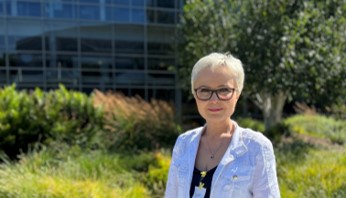 ‘I would like to express my sincere gratitude to Templeton Education and Charity Trust in supporting my studies during this academic year. It helped me to participate in the EMBA Module in USA in July 2023 which was dedicated to Entrepreneurial Finance and presents crucial learning points in entire EMBA course. It equipped me with amazing knowledge and important tools for my future in business which excites me so much. It allowed to learn from the best in the world – Stanford University, Google, Open AI.’
Tanvi Nautiyal (MBA, 2022)
 ‘My classmates and I had the amazing opportunity to explore the bustling tech scene of Berlin (with support from TECT) by visiting Lakestar, Atlantic Labs, FoodLabs, Merantix, Merantix AI Campus, Halitus GmbH and GetYourGuide.
‘When working for a VC, it’s crucial to identify your niche: sourcing, investing, or adding value. Building and maintaining relationships are also important.
‘Venture studios are beneficial when a business idea is impactful but the technology is still emerging, with few or no startups working in that area.
‘Supply is a challenge in the deep tech sector. Pre-ordering can help mitigate future issues.
Hardware startups should consider asset-light solutions such as licensing part of their technology to other companies and their products.
‘Data may not always be sensitive or specific enough. Viability and desirability should also be considered. For instance, in the US, only 16% of those who should undergo lung cancer screening actually do so.’