Understanding and implementing evidence-based changes in adult social care

Jon Glasby
Governing Body Fellow Professor Mary Daly welcomed Professor Jon Glasby to the Care Initiative on Monday 31 October 2022 to talk about IMPACT ‘Improving Adult Care Together – the new UK centre for implementing evidence in adult social care, funded by the ESRC and the Health Foundation. Jon, who is Professor of Health and Social Care at the University of Birmingham and a qualified social worker by background, is Director of the new centre.
Lecture report
Green Templeton alumna Dr Gemma Hughes (DPhil in Evidence Based Health Care, 2015) reports from the evening:
Professor Jon Glasby explained the objectives of IMPACT and how he and others have been working to co-design the programme of work the centre will lead. In short, IMPACT aims to support more widespread use of evidence in social care, build capacity and skills in the social care workforce to use that evidence, facilitate relationships between stakeholders to co-create change and learn more about what works in terms of implementation in social care. What matters to IMPACT is what works, and what works, as the strapline of the new centre summarises, is not just services but good support.
Good support isn’t just about ‘services’ – it’s about having a life
IMPACT’s inclusive approach to evidence is guided by insights about evidence from the many people they have engaged with over the last year (the first year of the project was devoted to information gathering). Evidence is more than just knowledge produced by research studies; it includes lived experience and practice knowledge. IMPACT aims to ‘turn up the volume’ on lived experience and practice knowledge to ensure valuable knowledge about what works for people is shared and used in making changes.
Jon and colleagues have heard consistent messages from a range of stakeholders about the priorities for the centre in terms of both topics and approaches. There has been consistent support for specific topics: of particular importance were prevention and well-being; person-centred and assets-based approaches; carers’ health and well-being; and supporting people who work in adult social care (as well as people with unmet/under-met needs). There has also been consistent support for practical approaches. ‘Learning by doing’ will be centre-stage as there is a clear sense that change is both needed and wanted. Implementation needs to be real, grounded in the reality of local services and people’s lives, not constrained to simply producing more evidence.
To describe what success might look like for IMPACT, Jon reflected back to his own experiences as a newly qualified social worker who was once accused of ‘thinking too much’ when asking about why things were done a certain way. A measure of success in achieving IMPACT’s aims might be that future social workers asking such questions would receive answers based on a better range of evidence.
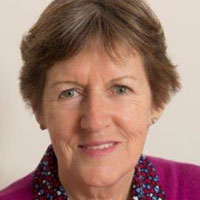
Mary Daly
The Care Initiative audience, made up of academics, policy-makers, social care providers and other key stakeholders, were warmly receptive of IMPACT’s establishment, working methods and ambition. The audience welcomed the greater emphasis on evidence and implementation support for adult social care than has previously been seen, particularly in comparison to healthcare.
Personal experiences of poor adult care, unfortunately, underlines the importance of the centre’s work and prompts questions about the objectives of the centre in relation to the need to lobby for more resources. Whilst this kind of lobbying work is beyond the scope of IMPACT, there is a clear understanding from those involved in the work of the centre that what happens in social care is strongly influenced by funding and national policies. It could be argued that in the current context of reduced funding and delayed and inadequate national policy support there has never been a worse time to try to improve social care. On the other hand, and more optimistically, there has never been a better time to improve social care.
IMPACT has developed a range of ways of tackling different types of challenges in different locations and will be recruiting sites to work on these in 2023-2024. More information
A PDF of the slides Professor Glasby used at the event is also available