
Victoria Butler-Cole QC discusses medical decision-making and the law
Green Templeton College recently welcomed Victoria Butler-Cole QC for an insightful and fascinating talk on medical decision-making and the law, as part of the Sheila Kitzinger Programme.

Victoria Butler-Cole QC spoke as part of the Sheila Kitzinger Programme
The lecture by Butler-Cole, of 39 Essex Street Chambers, closed a seminar held by the Sheila Kitzinger Programme called All Life’s An Experiment, which explored how to involve patients in decisions about their medical treatment including the use of novel, experimental, or untested therapies.
Setting out the content of her talk, which focused specifically on the courts’ role in medical decisions, Butler-Cole said she would be reflecting on two trends she thinks have become particularly apparent recently.
“One of them is a decline in the respect that is afforded to the concept of clinical judgement, and the second is an increase in disagreements between patients and families and doctors, which result in the courts being asked to make decisions instead,” she said.
“Why has there been a decline in respect for clinical judgement?” she questioned. “Is that why there are more disputes reaching the courts, or have the courts’ decisions themselves actually been responsible for the decline in respect given to clinical judgement?
“Or is there something else causing both those trends? Is it as simple as saying now we’re in the age of internet we can find out things for ourselves? We can share information, talk to other people, do our own research, and draw our own conclusions, so of course we’re more likely to perhaps disagree with or challenge what our doctors say?
“Or perhaps we’re more likely to think when we have those disagreements we might pursue them all the way to a court instead of just backing down.”
Butler-Cole said if she’s right that both of these trends are becoming more apparent, the next question becomes whether it’s a good or bad thing.
“Does it matter if clinical judgement is now just one factor among many that has to be taken into account, rather than something you have to automatically respect? Is it actually a bad thing if people can’t agree among themselves and the court steps in?”
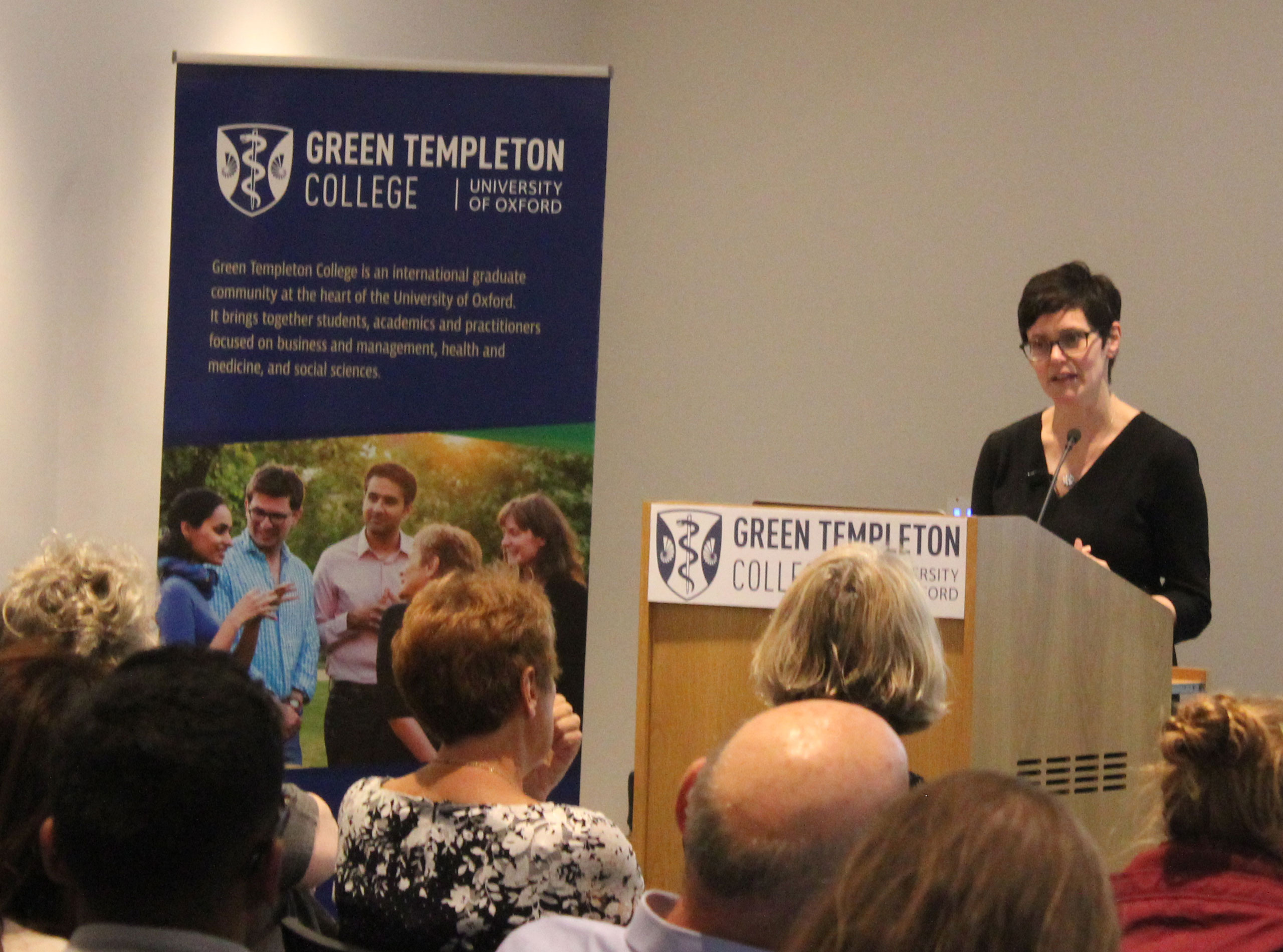
Her lecture looked at these “interesting and difficult” questions, with Butler-Cole saying she hoped people would develop their own thoughts based on the case studies she was presenting.
“I’m very firmly of the belief that all of these things need to be talked about and thought about by everyone. One of my least favourite phrases of all time is the phrase ‘the ethics hasn’t caught up with the science’. I think the same sort of problem applies here.
“It’s very easy to say, ‘Oh, well, our ethics haven’t caught up with what doctors can do.’ But ethics doesn’t need to catch up. It’s not that ethics is somewhere lagging behind. It’s that these are really difficult questions and people have different opinions about them, and if we don’t talk about them or figure out what it is we all can agree about or what all perspectives are, then we aren’t really getting anywhere or making any progress.”
The Sheila Kitzinger Programme at Green Templeton College honours the life and builds on the work of the social anthropologist Sheila Kitzinger. Her comparative research blended intense immersion in different communities, participant fieldwork and strong clinical knowledge to advocate evidence-based decisions on medical, legal and social change.
Find out more about the Sheila Kitzinger Programme here.
Vincent is purr-fectly ready for Valentine’s Day! ❤️🐈⬛🌹


Read the latest issue of Observatory magazine 📖
This edition brings together insights from colleagues influencing public policy, reflections from alumni and celebrates our students successes!
Read via the link in our bio 💫


We’re proud to be flying the LGBTQ+ flag outside college to mark LGBTQ+ History Month. 🏳️🌈

The college was delighted to host the @guildofchefs_oxford winter feast last month.
Head Chef @oliversnowden curated a truly wonderful menu.
🥂 Canapés
🧀 Isle of Mull cheddar and truffle gougères
🍖 Glazed lamb belly
🐟 Sea bream crudo
🍞 Bread
🥖 GTC sourdough
🧈 Marmite and caramelised onion butter
🐄 Ampersand Dairy butter
🥕 First
🔥 Slow-roast sand carrot • Somerset Dairy Fetish • sherry
🐟 Second
✨ Brill • Hundred Hills sparkling sauce • sea vegetables
🌿 Artichoke barigoule
🍖 Third
🐖 Middle White dry-aged pork loin • preserved summer apricot • kromeski • Calvados jus
🍄 Wild mushroom risotto • truffle
🍫 Dessert
🍒 Madagascar Ambanja 72% cremeux • cherry • cocoa nib
Congratulations to @observatory_team for an excellent evening.
Special thanks to the suppliers that supported the evening so we could make it extra special @cotswoldgameandmeat @newwaveseafooduk @lordwelluk
📸Photographs courtesy of @ronniallenphotography


