Panel: How can investment drive human welfare improvements?
Three experts took part in the Ethical Investments panel, which focused on the topic of how investment can drive human welfare improvements.
- Mr Mouhamadou Diagne
Inspector General of The Global Fund - Mr Thierry Martin
Executive Director at a Swiss private bank (speaking in a private capacity) - Dr Boya Wang
Research Fellow and Quantitative Lead for the Ownership Project at Saïd Business School
Panel report
By Claire Weil, speakers’ manager, Human Welfare Conference 2019
In a world where most decision-making is profit driven, can investments drive human welfare? Dennis West, a University of Oxford DPhil candidate in Organizations and Governance, moderated a panel composed of Mr Mouhamadou Diagne, Inspector General of the Global Fund, Mr Thierry Martin, executive director at NBK Banque Privée, and Dr Boya Wang, Research Fellow at Saïd Business School and Quantitative Lead of the Oxford Ownership Project.
The conclusion of the panel speakers is: yes – financial decisions and placements can definitely “do good” but how these decisions to invest in welfare come about is quite complex. Investments in human welfare can go far: from helping countries reach Sustainable Development Goals by reducing the negative impacts of HIV/AIDS, TB, and malaria but also, as a new report from Georgetown University showed, improving democracy, good governance, and rule of law. However, investing in human welfare is a complex enterprise because of regulations, constraints, legislation, but also in understanding the risk associated and value generated by those investments. Investors are looking for a return on their investment: if I invest a certain amount, what do I get back in return? For some, it is just easier to give away for philanthropy because investing in human welfare does not bring back as much. We tend to think of individual investments more driven by ethics or moral values but research shows that large actors with long term perspectives actually can do better in ESG performance (environment, social, and governance) than small family investments for example. Return on investment can also go beyond just “dollars” and value can be measured beyond dollar metrics. Maybe it could be beneficial to frame the conversation on investment, not as an ethical act, but rather as an investment in human capital.
Both panelists and questions from the audience discussed metrics on how to communicate and create inventive for small behavior change. Should we be talking about inputs and increasing “coverage” and change that way rather than just examining and assessing outputs of human welfare – particularly when those are not clear? The conversation then questioned whether, rather than framing things as “investment in human welfare”, we could think about investments to mitigate “the bad”. There are different “shades” to the impact that an investment can make. There are different pathways to improve human welfare and investments are just one way of doing so. A large emphasis was also put on the need to take into account different dimensions of context and environment in terms of impact. The definition of human welfare itself can be confusing and fluid for different people in different places.
It is important to mobilize investors, banks, and other financial institutions, but it is also quite crucial to approach this topic with more stakeholders who take part in these transactions and influence the trends and “fashion” in the market. Who can facilitate the process of investing in human welfare? In a more philosophical sense, the panel also broached the topic of whose responsibility is it to point investors in the “right” ethical direction and encourage them to make investments that improve human welfare? Who sets these standards for human welfare and how can those be neutral and fair for all those involved in the process?
These is no easy answer to any of these questions but starting the conversation on how we can better use limited financial resources to improve human welfare and well-being at large scale was already quite a start to reflecting and making a change.
Video of the panel
The Ethical Investment panel was livestreamed by Human Welfare Conference 2019 sponsor Gapeli: watch the Ethical Investment panel here.
Pictures from the panel
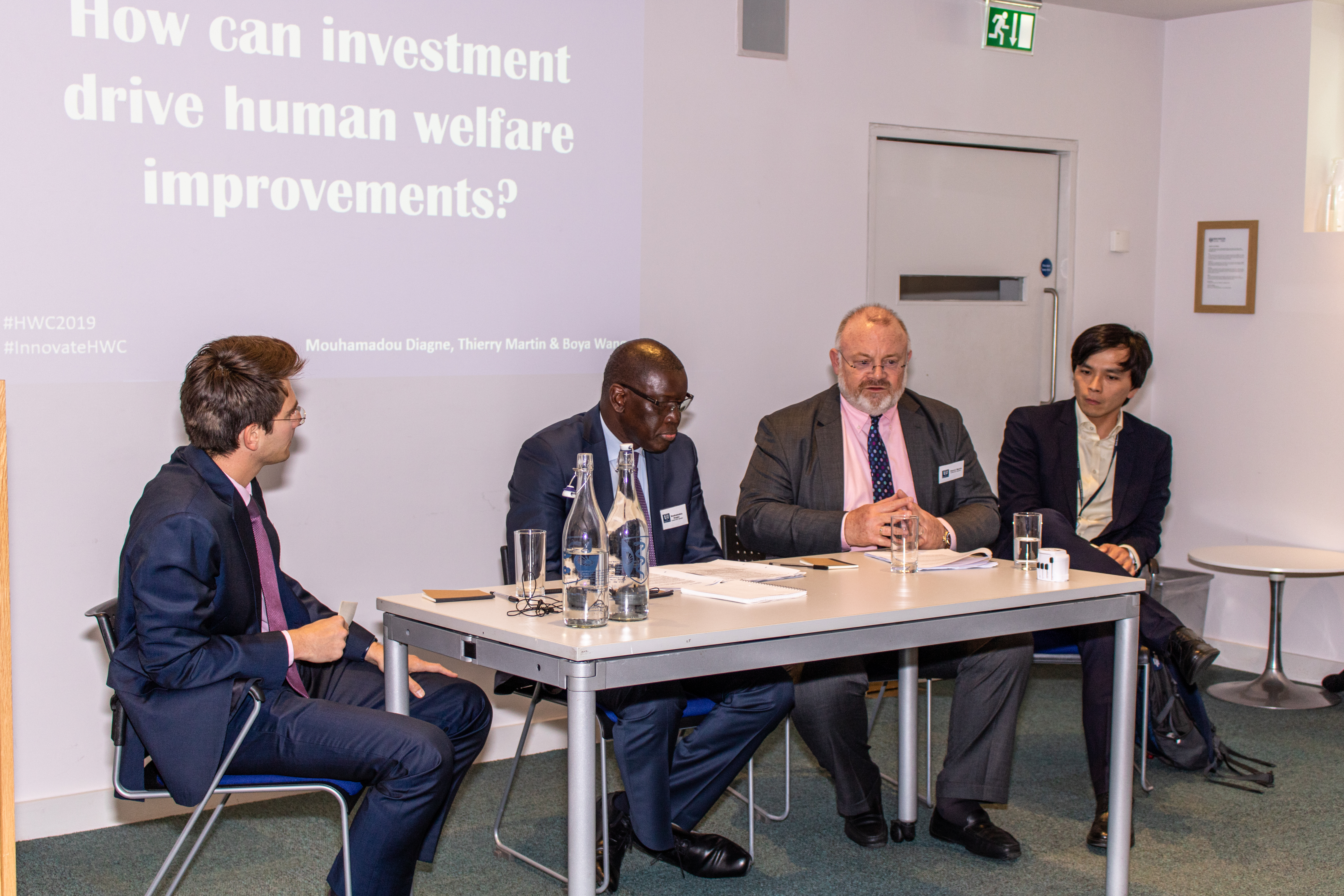
Dennis West, a University of Oxford DPhil candidate in Organizations and Governance, moderated the panel (Credit: Nuno Pereira)
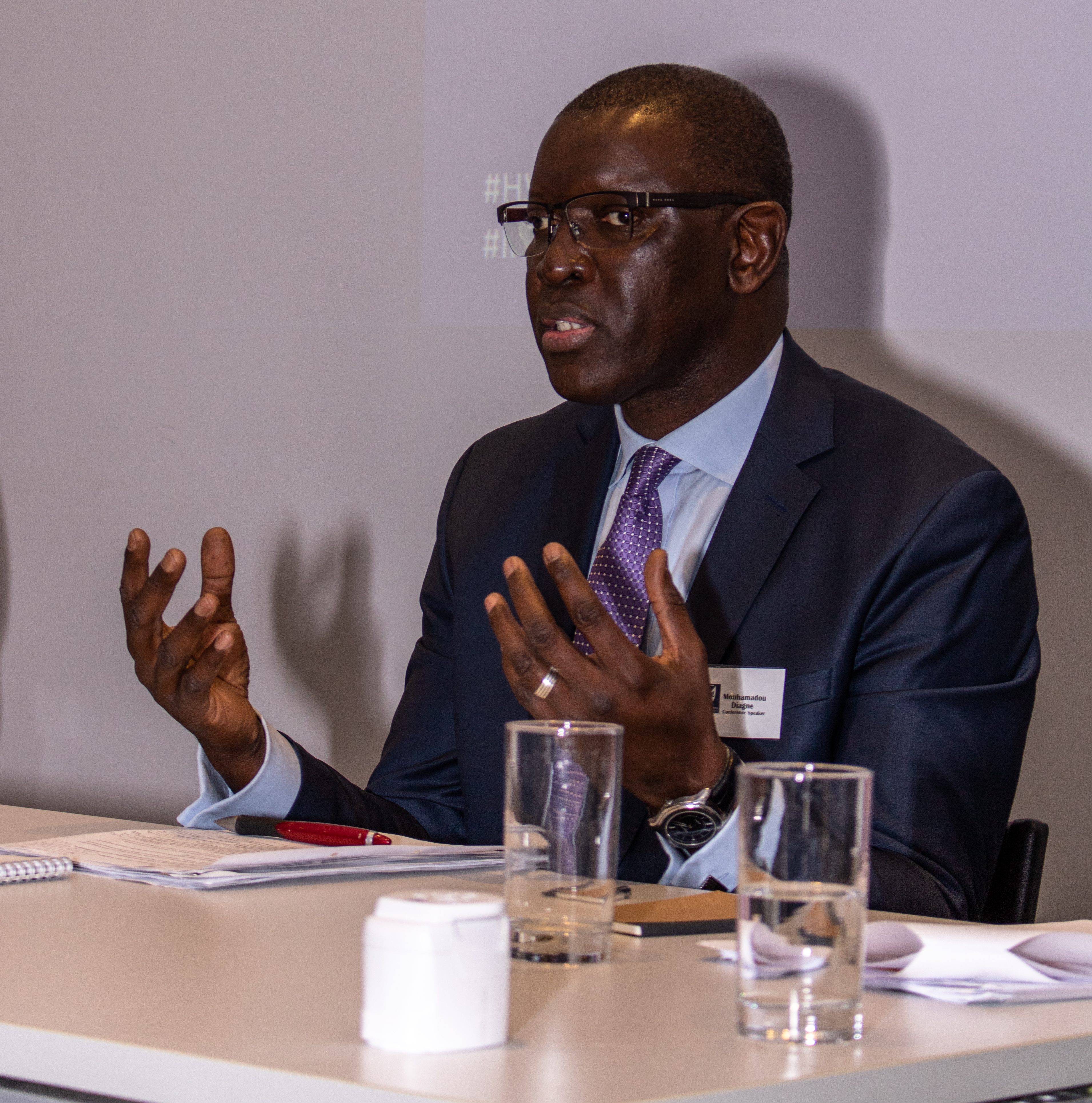
Mouhamadou Diagne, the Inspector General of The Global Fund (Credit: Nuno Pereira)
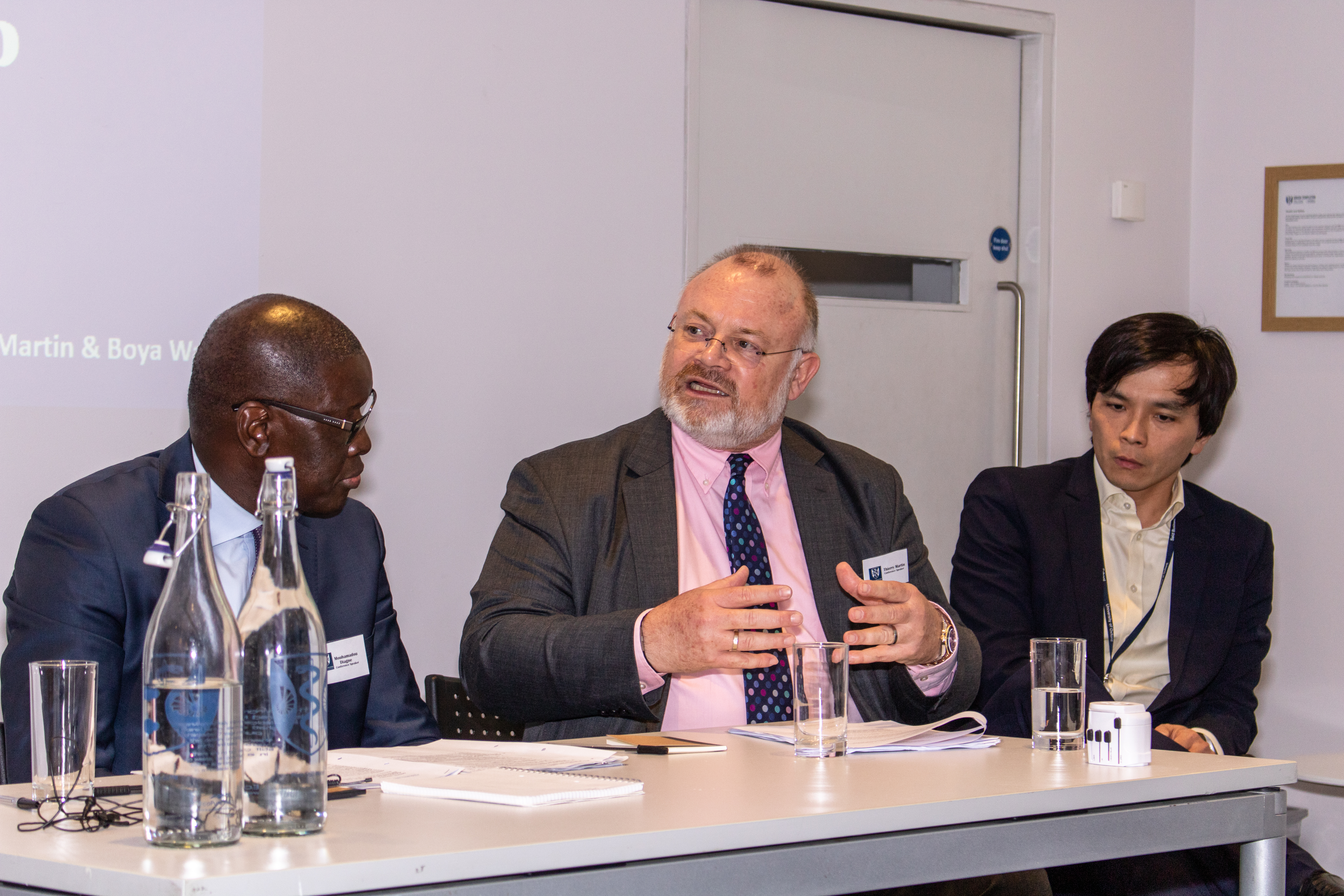
Thierry Martin, Executive Director a Swiss private bank, speaks at the panel (Credit: Nuno Pereira)
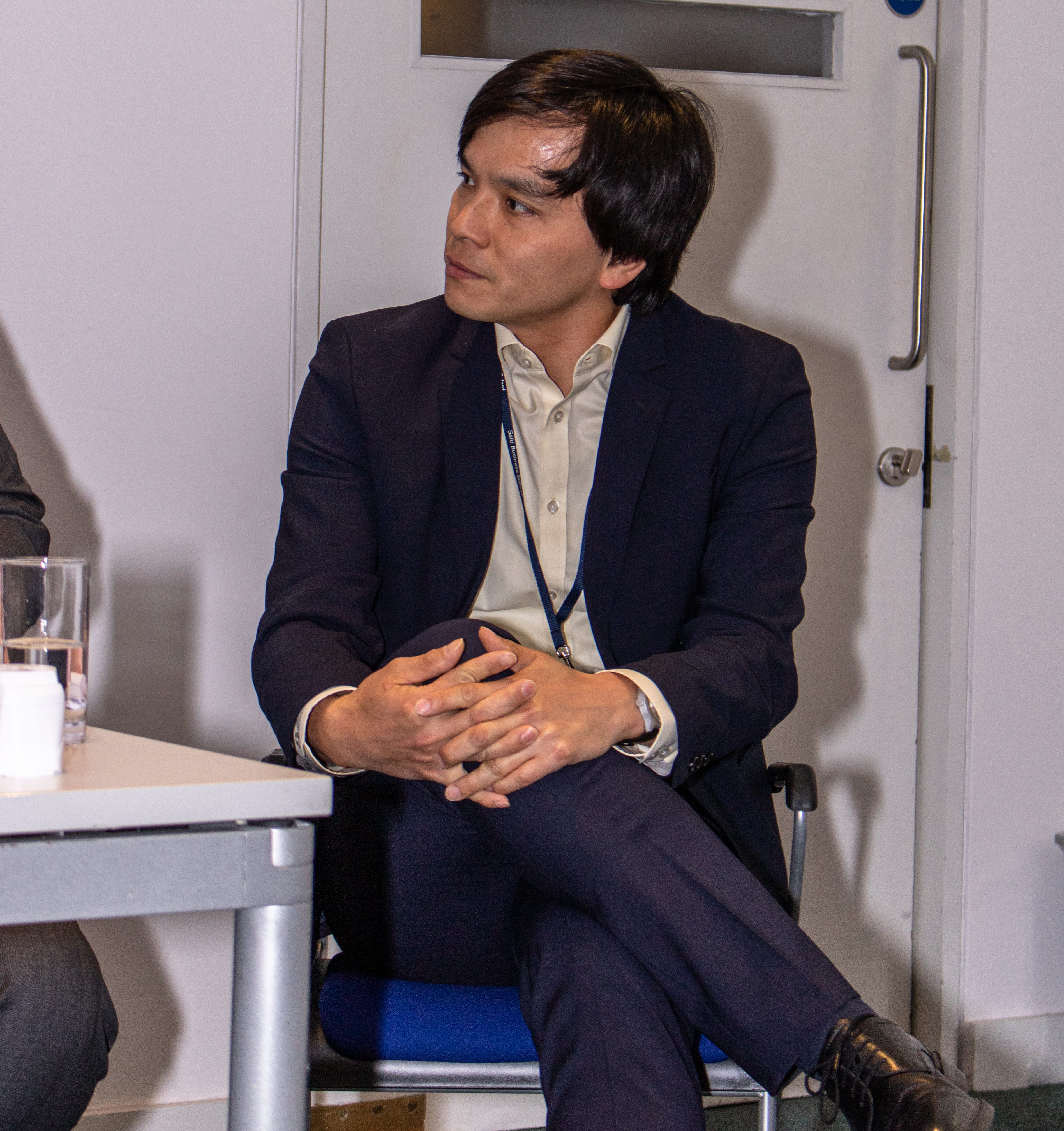
Dr Boya Wang, Research Fellow and Quantitative Lead for the Ownership Project at Oxford Saïd (Credit: Nuno Pereira)
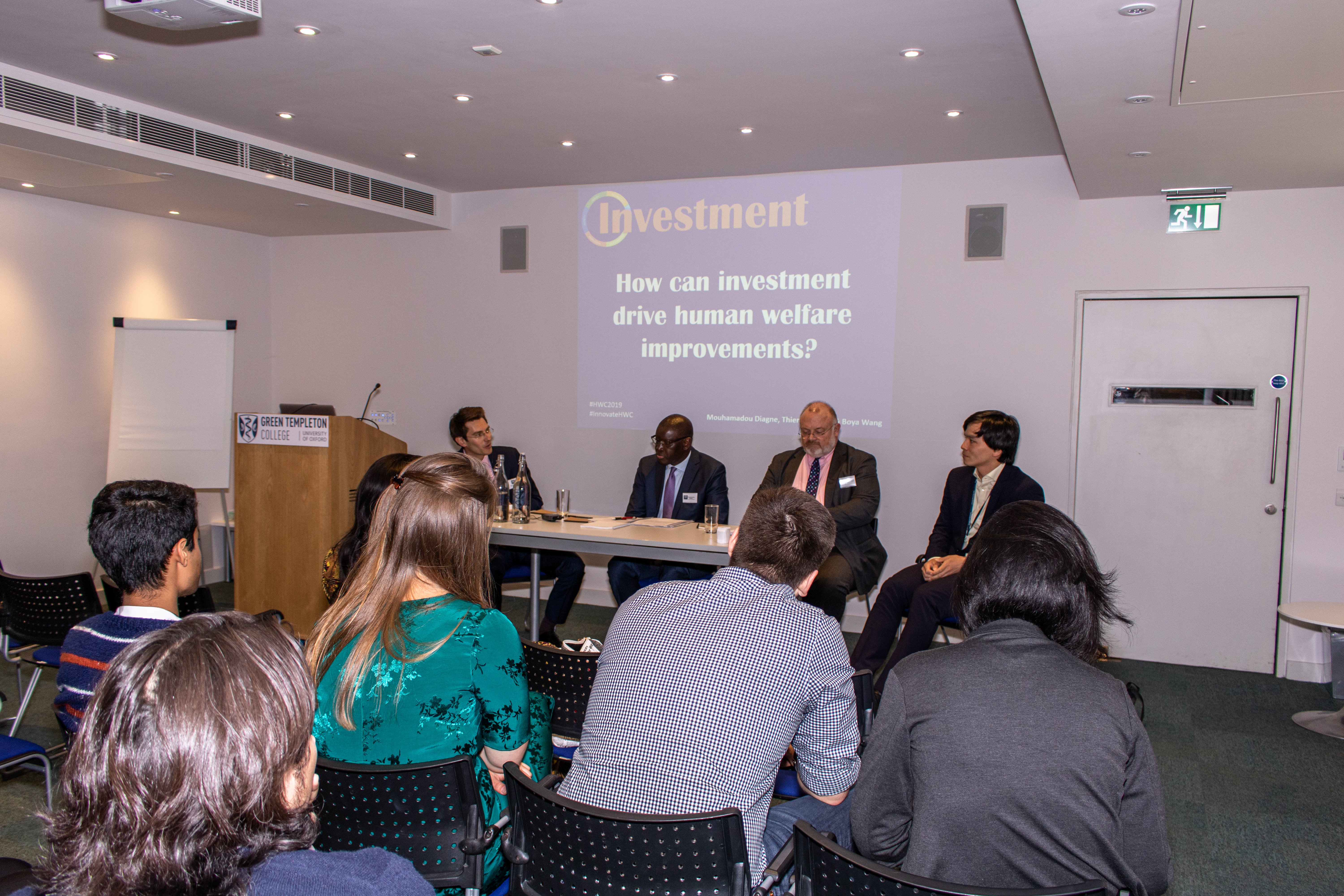
The panel explored how investment can drive human welfare improvements (Credit: Nuno Pereira)
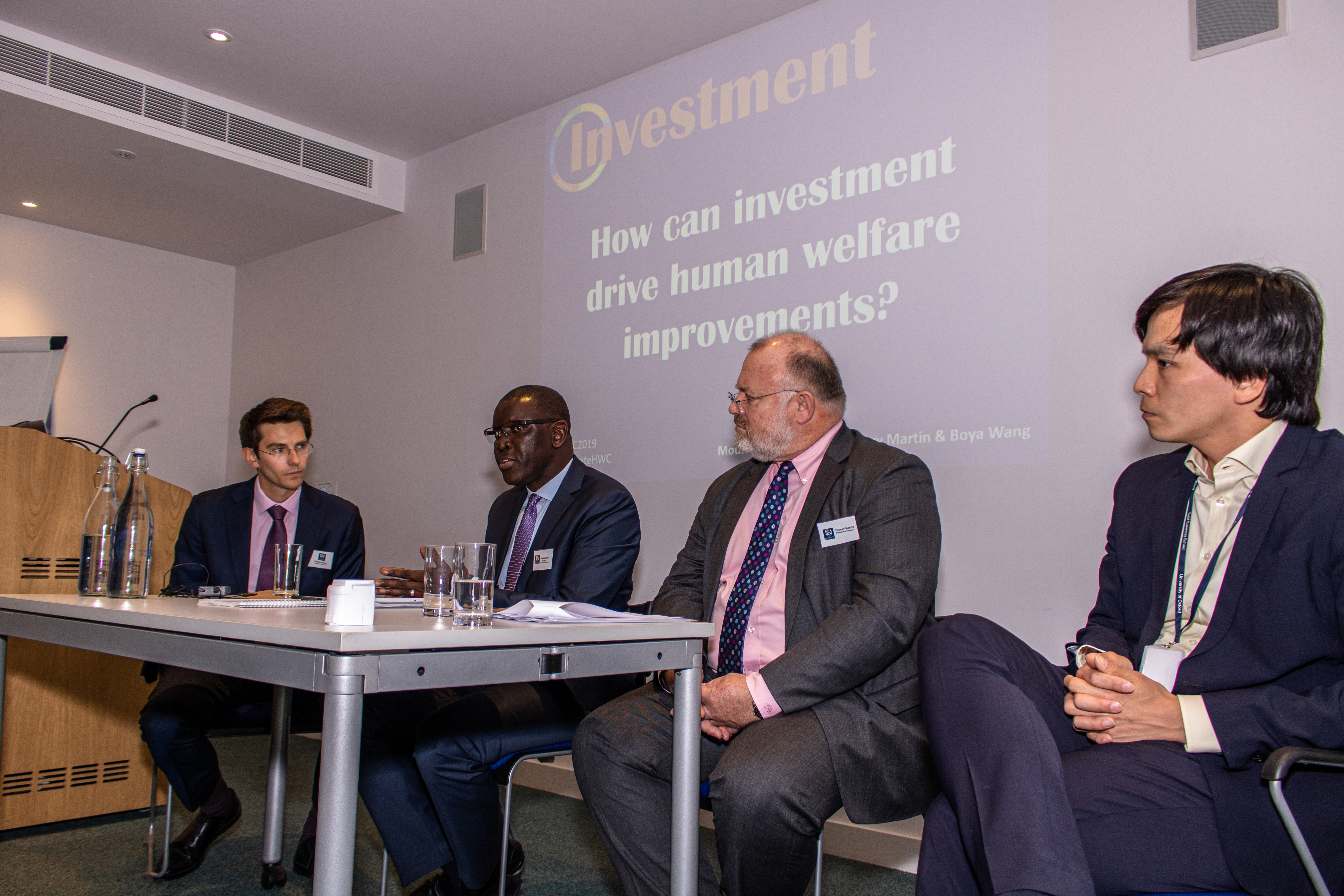
The panel took place on day one of the conference (Credit: Nuno Pereira)