Panel: What kinds of innovation will drive future improvements in health?
Four expert speakers took part in a panel about technology and health, discussing what kinds of innovation could drive future improvements in health.
- Dr Mara Airoldi
Green Templeton College Research Fellow; Director of the Government Outcomes Lab (GO Lab) at the Blavatnik School of Government, University of Oxford - Dr Nick Fahy
Green Templeton College Research Fellow; Senior Researcher at Nuffield Department of Primary Care Health Sciences, University of Oxford - Dr Alexander Finlayson
Green Templeton College Doll Fellow; CEO and Head of Product at Nye; GP - Professor Kokila Lakhoo
Consultant Paediatric Surgeon, Children’s Hospital in Oxford and University of Oxford; Chair of the International Forum, British Association of Paediatric Surgeons; President, Global Initiative for Children’s Surgery
Panel report
By Rosemary Walmsley, programmes manager, Human Welfare Conference 2019
“What kinds of innovations will drive future improvements in health?” Dr Mara Airoldi, Dr Nick Fahy, Dr Alexander Finlayson and Professor Kokila Lakhoo participated in a panel discussion to answer this (huge!) question. It soon became clear that this would not be a discussion focused narrowly on technological change, but rather focused on the systems, processes and, crucially, teams that must come together to deliver high-quality health care and health improvement in the 21st century.
Various strands of discussion emerged. One was the role of learning and how health systems can get quicker at translating emerging best practice into on-the-ground impact for patients. Another was the challenge of working in a system as complex as a health system with responsibility for something as special as people’s lives. The analogy of healthcare as a restaurant where someone orders, someone else eats the food, and a third person pays illustrated how coordinating agreement can be a challenge in health and how crucial trust in the others in the system is.
We talked about effective past innovations, such as NICE, and the need to work with the communities which you hope to serve, and engage with the outcomes people receiving care want to see. Some of the most thought-provoking conversations emerged from audience questions. What if someone on a team isn’t pulling their weight? As a clinician, how do you balance the need to change the system with the need to do absolutely all you can for your patients on the day, with whatever resources you have? What is the effect of ageing on health systems, and what is the effect of rising expectations?
The panellists drew on a wealth of experience to illuminate the issues. Whether it was Professor Lakhoo’s 20+ years experience working to train paediatric surgeons in Tanzania, Dr Airoldi’s work with health commissioners and her innovations developing a payment structure that encourages various elements of the system to work together to reach the desired outcomes, Dr Fahy’s former life as an EU policymaker, or Dr Finlayson’s work both as a GP on-the-frontline and as founder of a social enterprise, we knew we were hearing from people who really had walked-the-walk of making a difference to health.
These examples and the deep sense of care and commitment to health that pervaded the discussion left me feeling that, though there are very great challenges, it is possible to change health across our global community for the better – and it is certainly a fight worth fighting.
Pictures from the panel

(l-r) Dr Nick Fahy, Dr Mara Airoldi, moderator Rosemary Walmsley, Professor Kokila Lakhoo, Dr Alexander Finlayson (Credit: Nuno Pereira)

Green Templeton Research Fellow Dr Nick Fahy addresses the room (Credit: Nuno Pereira)

Professor Kokila Lakhoo shares her views on the topic (Credit: Nuno Pereira)

The panel explored what kind of innovations could drive future improvements in health (Credit: Nuno Pereira)
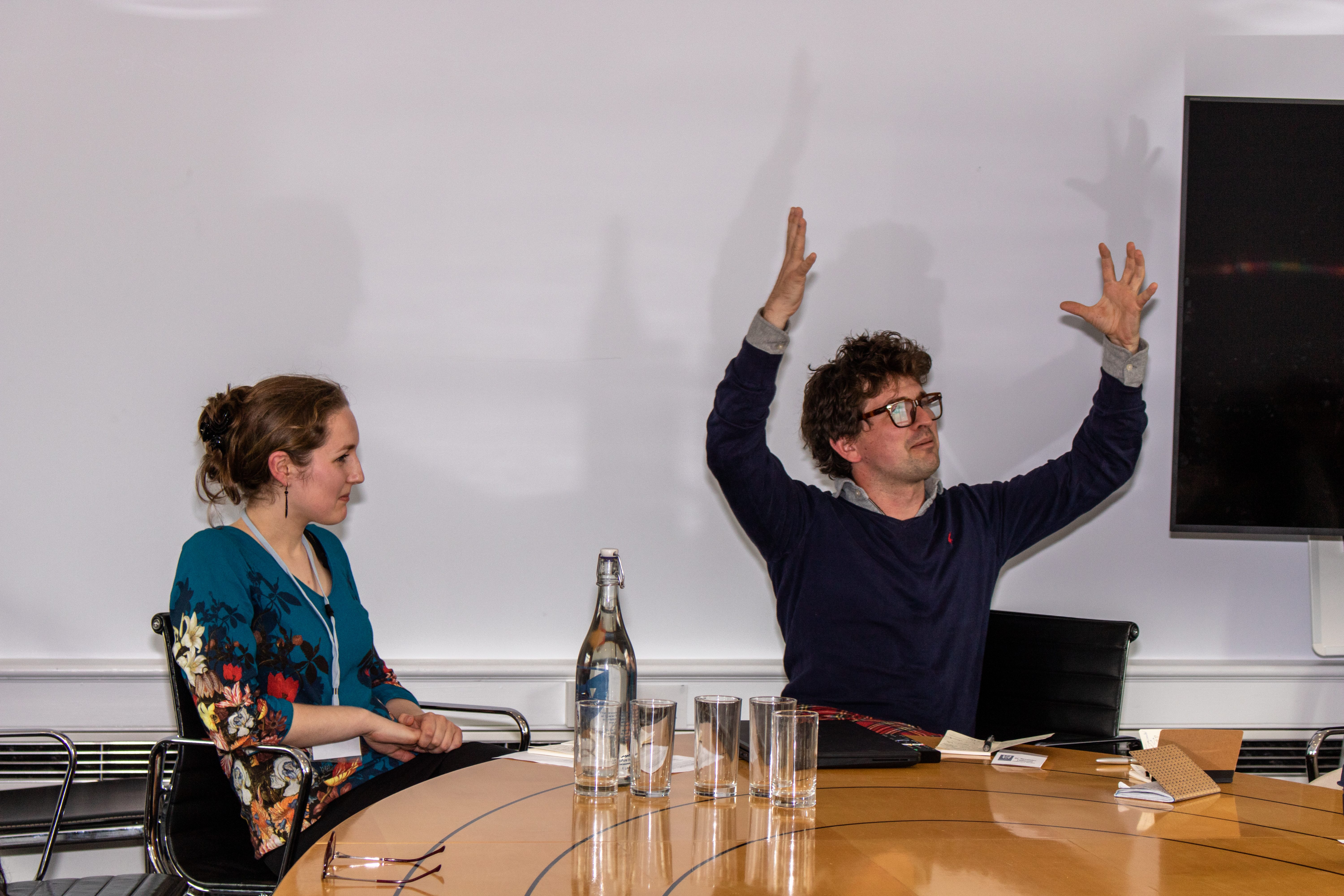
Moderator Rosemary Walmsley with Alexander Finlayson (Credit: Nuno Pereira)