An interview with Mitali Mukherjee
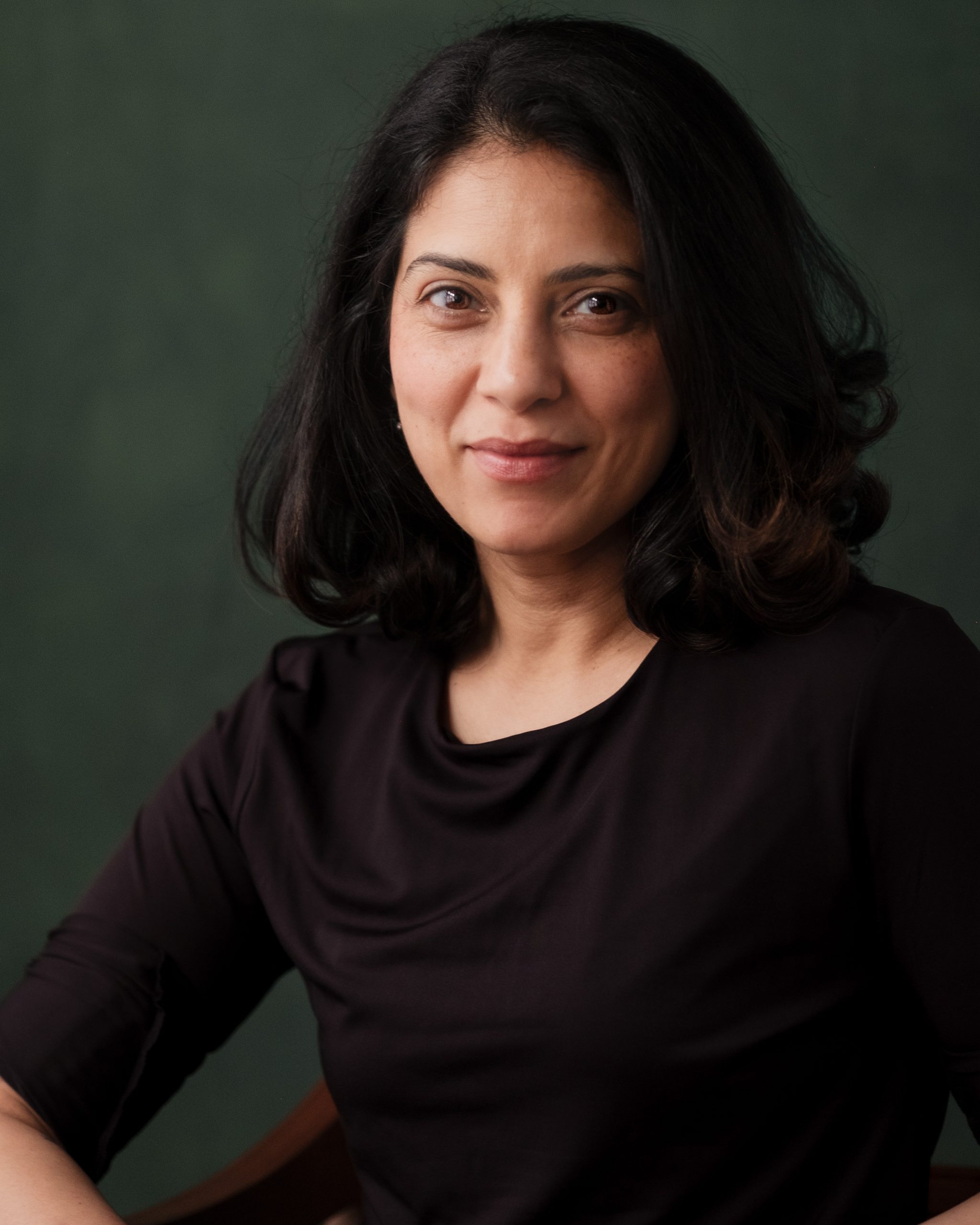
Mitali Mukherjee was appointed as Director of the Reuters Institute for the Study of Journalism in April 2025.
Observatory magazine sat down with Mitali in her office at the college’s 13 Norham Gardens a few months into her new role to hear about her upbringing and journalistic career in India, moving to Oxford, and work leading the institute with a multitude of deep connections to Green Templeton.
Could you start by telling us a bit about yourself?
I was clear about what I wanted to do from a young age. Maybe it was a part of my upbringing where news and current affairs were very much a part of family discussions. My father was in the defence services, so I’ve always been a bit of a nomad. It gave me a view into my own country, India, which is essentially a subcontinent. I saw it closely from different points, geographically and
culturally.
I’m Bengali by origin and we have a reputation for having lots of opinions and voicing them. So, a lot of dinner table conversations were about the ‘news’, politics, current affairs, economics. By the age of 16, I was quite sure being a journalist was what I wanted to do.
I studied Political Science for my first degree. I went to college in the mornings and in the evenings I worked at small local TV stations and newspapers. That’s where I caught the journalism bug, and it never left me. I then went on to do my Master’s in Television Journalism.
You then began a full-time career as a journalist
Yes. And the bulk of my career has been in journalism, with a particular slant to political economy. As equity markets editor at CNBC, a business channel, I spent close to a decade in Mumbai, the financial capital of India. A large part of my career was also spent in Delhi.
When I started out, I was keen to understand the back end of the process. So, I joined a production company, where I was a producer, and learned everything from editing to how to film and how to script.
It was hugely important in terms of building my understanding of the industry. And it made me appreciate that teamwork is the most important thing. Particularly with television news, we see that one person on screen, and for several years I was that person, but there’s a whole host of people working together in a newsroom; a camera person, studio technicians, a makeup team, a research team – that’s what I thought made the industry so incredible.
You’ve worked as a reporter, but also as a producer, anchor and editor
I have worked with established brands like CNBC, where I was covering equity markets and business news, so very stock market oriented. I did that for more than a decade.
And then I felt I needed a break from ‘stock talk’ and moved to a digital media outfit. India has seen a massive political change in the last 15 years, and it has had a huge impact on journalism. Large parts of mainstream media moved towards self-censorship. I don’t want to be a moral compass for the entire industry and people must make their own choices, but it wasn’t the kind of journalism I wanted to pursue.
I wanted to work with organisations that supported independent reportage and addressed a clear need for audiences. In India, smaller, newer digital outfits have shown a more independent line in their reporting and journalism.
I also co-founded startups. One that looked at building financial literacy, especially for women, which I feel really strongly about, and another that worked at building greater collaboration between free press and civil society. They weren’t hugely successful and I will say that I think the most important lessons are the ones where you fail but it is also something I love doing as a leader, building ideas in a collaborative way.
The startups began well but didn’t go as far as we wanted, and I came away having learned important lessons about management, about financial planning and thinking like an entrepreneur. And in many ways, I transitioned from being a journalist to being in an executive role.
You then ventured beyond journalism
Indeed. Two startups later, I worked for a while in a think tank, the Observer Research Foundation, with a particular interest in two areas: gender and climate. It was very rewarding to work with a deeper academic approach. While gender has been hugely important, climate began to draw more attention as an issue. India is a vast country. It is heavily fossil fuel reliant and while it has been looking at renewable solutions, the country is an interesting case of what you can and cannot do at scale, and ultimately how climate change and its impact – by way of severe air pollution or intense heatwaves – affect the lives of ordinary people.
Why Oxford and the Reuters Institute?
I actually interviewed my predecessor Rasmus Kleis Nielsen for an article, which is when we first interacted. I admired the work done by the Reuters Institute and when the role of Director of Journalist Programmes opened in 2022, I decided to apply.
At the end of the interview for that role, I was asked: ‘Would you be willing to move to Oxford?’ It meant moving a city, a country and a continent. As they say, it just takes three seconds of either insanity or courage! I said yes. And here I am. Honestly speaking, it has been one of the best professional and personal decisions of my life.
Oxford is a very multicultural city. It’s a melting pot of bright ideas and people looking to collaborate, and I love that. The Reuters Institute for the Study of Journalism particularly has a very international approach and focus.
We understand that journalism touches every part of the world. We understand that there are more stories to be told than those in the Americas and Europe. And the goal of the institute has been to inform the news industry through high quality research around audiences and to engage with journalists and news leaders across the world.
In many ways, I see this role as an iteration of everything I’ve done over the last two and a half decades. It’s a global role with international impact, and I consider myself lucky to be working alongside such bright and talented people.
When you later became Director of the institute you spoke about the ‘deep bond’ between the institute and Green Templeton
The Journalist Fellowship Programme is over 40 years old and started in 1983 within Green College, which then became Green Templeton. The Reuters Institute for the Study of Journalism was established in November 2006 with core funding from the Thomson Reuters Foundation and the association for journalist fellows remained with Green Templeton College. I am so happy about that because being associated with the college has provided a home away from home for many of our journalist fellows.
Many come from very difficult reporting environments, having documented war or violence. The institute is a place for them to build a global network, to work on projects that speak to a challenge in journalism, but it is also to provide much needed relief from an intense and demanding profession. Being part of Green Templeton gives them that space; to meet and interact over lunch with other academics and students, to spend time in the libraries. They sign up to be part of the boat club, or the choir – they’re soaking up all the opportunities.
That’s the richness of college life. Being able to realise and recognise you are welcome in a community: I’m here and I belong, and my voice matters. I think that’s the most important thing for anyone, journalist or otherwise.
Can you expand on the work of the Reuters Institute?
When the institute was created, the focus was on how we inform the conversation about journalism through debate, engagement and research. That remains our core focus.
While studying journalism, our approach has always been to bring more understanding around what audiences want, while also recognising the challenges that newsrooms face. If we consider journalism to be a public good, it must deliver and be responsive to its audience. When that link snaps, it affects journalism as an industry but it also affects a thriving, thinking society with space for debate and differences of opinion. Our research has always tried to ask: What do the public think? Why are people engaging less and less with the news? What are they seeking from this news relationship?
Then there’s engagement with journalists at the Reuters Institute, which includes the fellowship programme and our leadership work. Part of the journey is the process: creating safe spaces to have difficult conversations, learning to disagree with each other. It’s also the realisation that you could be a journalist from Finland or Burkina Faso, but many challenges are similar and familiar.
Journalism itself faces many challenges. There are financial concerns, but it is important to recognise they are not new. There is, for more and more parts of the world, a rapidly changing political backdrop, with shrinking space for critical journalism. Attacking an independent press has become a familiar tool for authoritarian regimes. In fact, the three things that often come under attack in these moments are journalism, civil society and academia.
And the third core pillar going back to our study of audiences, and to my mind the most important, is public debate. We have to listen to the public, with a view to learning and re-charting our course. Journalism will need to be honest about its tendency to ‘gatekeep’ news, information and reliability. More and more, we see audiences turn to social media, to share opinions with each other. Journalism will need to open up spaces to listen to them – particularly so for young people and people from lower socioeconomic backgrounds, who don’t often see themselves reflected in the news.
Are you optimistic for the future?
Absolutely. One of the best pieces of advice another CEO once gave me was: ‘Forward is forward.’ I like that. It’s not helpful to keep looking over your shoulder – we have to look at the future.
This is why I’m passionate about our work on younger audiences. The future will be built by them and their vision of what they want their societies to look like.
I think of myself as a pessimistic optimist. I do think about all the things that could potentially go wrong, but I have a strong belief that journalism plays a vital role in informing societies. In moments of strife and stress, people
still turn to trusted journalism. COVID is an example of that. People wanted news that they could trust, that was accurate, to guide them. I think that role remains, and it points to the importance of robust and independent public service broadcasters who help provide quality news and information to all members of the public.
Final thoughts
As journalists, we need to start talking to people in other industries. In that sense, the relationship with Green Templeton is super important because journalists get to speak to non-journalists and do non-journalistic stuff. That’s the best way of learning – stepping out of your silo and talking to people doing wholly different things.
There’s something special about the experience that journalist fellows have here, before they go on to doing many different things across organisations and roles. But the connection that they feel with the university, the college and the institute is special. I see them as allies across the world.
More importantly I am so proud to be leading a team that is very much a collective. We’re a small but ambitious and committed institute. The institute itself is the product of so many stakeholders who remain deeply attached to RISJ’s journey and success. It takes a village.
This article by is extracted from the latest issue of Observatory magazine