College hosts stargazing nights
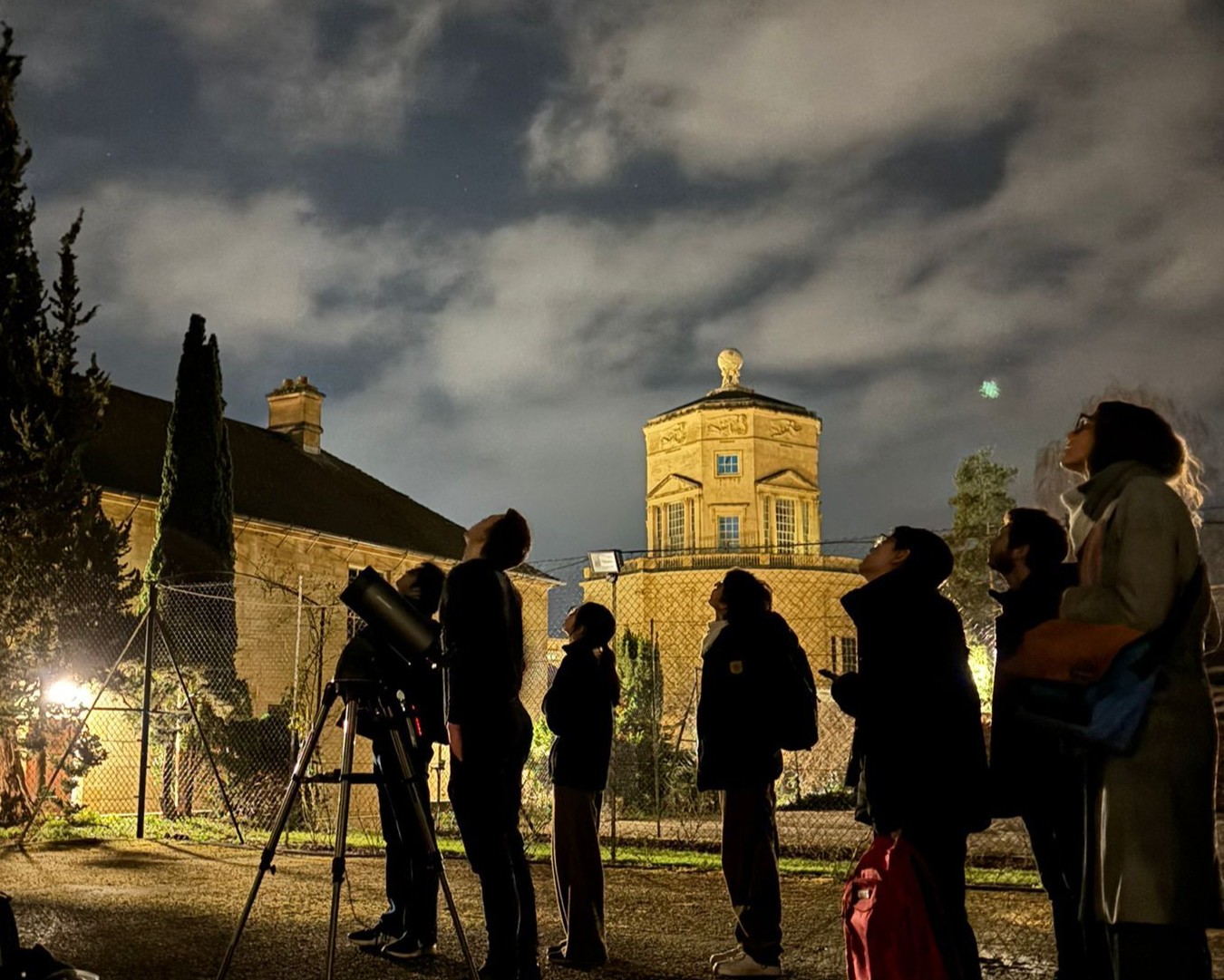
Green Templeton hosted its first stargazing events in February 2026, marking the start of what will become a series of regular events exploring the wonders of the Universe.
Astronomy Research Associate Steve Prabu shares some insight into the first evening
The evening was mostly cloudy, but a brief clearing gave us a perfect window to glimpse Jupiter and its moons through the telescopes before moving on to two engaging talks.
The first talk introduced the fascinating world of radio astronomy and began with a game of ‘What frequency is that?’, where everyone guessed the wavelengths of everyday signals such as FM radio, WiFi and mobile phones — and we discovered that early WiFi technology has roots in Australian radio astronomy. We then heard the iconic audio of the first pulsar discovered by Jocelyn Bell Burnell and learned how ancient Chinese astronomers had recorded the supernova that later became known as the Crab Supernova, which hosts the Crab Pulsar. The session then turned to modern frontiers, including Fast Radio Bursts and the search for technosignatures. Participants saw the radio spectrum of Voyager and discussed how astronomers analyse vast amounts of radio data, searching for narrowband or unusual signals that could indicate advanced technology beyond Earth.
The second talk highlighted some of the brightest objects in the sky, from Jupiter’s powerful radio emission (driven by its moon Io) to Sirius, the brightest visible star, along with familiar sights such as the planets and the Pleiades. Despite the clouds, the evening offered an inspiring journey through both the visible and invisible Universe — and marked the exciting start of regular astronomy outreach events at Green Templeton.
The stargazing evenings have been made possible by the generous donation of a Telescope and Telescope house by Professor John Lennox.