Commentary: Mary Daly on Prime Minister’s plans for care
Prime Minister Andy Burnham’s speech at Golders Green on 29 July has been widely reported as setting a new agenda for real change in the social care system.
Professor Mary Daly reflects
 There was much in Andy Burnham’s speech to welcome, and the tone of it was as striking as the content. It was clear that social care reform matters to the Prime Minister both professionally and personally. I was struck by the sense of resolve and, indeed, how he frames dealing with social care as a ‘test of myself.’ He mentioned especially that he would never forgive himself if he did not try to find a solution. I underline this because I think leadership, and brave leadership, is necessary to grasp the nettle of the reform of social care.
Burnham’s knowledge and critique of the care system in this speech bears out this commitment. His speech showed how care has long been threaded into his family life, but also his political career: he was already thinking about a national care service when he was a member of Gordon Brown’s cabinet between 2007 and 2010. His support for the Casey Commission indicates that he understands the complexity of the problem of social care, not least the need to solicit public opinion and involve the public in finding a solution. It was no coincidence that his speech coincided with the launch of the big conversation on care by the Casey Commission.
The content of the speech ranged widely. It covered the working conditions of care workers, the lack of recognition of the work and workers involved, the contribution of migrant workers, how much is expected of families to provide and pay for care, and the failure of politics – both in his own period and since – to grapple with the issue of social care. It announced three actions: a request to the Casey Commission to bring forward its final report by a year to 2027; an attempt to bring the conditions of care workers closer to those in the NHS (using planned fair pay reforms and the introduction of a care workforce negotiating body as building blocks); and the initiation of cross-party talks on social care, which he sees as part of a different approach to politics. Burnham was clear that he wants the Casey Commission to consider the idea of a national care service. This hints at major systemic reform.
What was missing from the speech, though, was informal care. This towers over – and acts as the foundation for – paid care. There are at least five million people providing care informally in England and Wales, far more than the number of paid carers. They get a poor deal in the existing system; they are almost completely ignored and yet the system would collapse without them. Unpaid carers also need support and their contribution needs to be recognised rather than rendered invisible and vulnerable to exploitation. Paid and unpaid carers are part of one system and should be treated together – or at least be part of the same conversation. I would have liked to see some specific actions for informal carers and a stronger sense of urgency around meeting their needs.
The Prime Minister avoided the issue of how to pay for any changes, and the potential contributions of different sectors, leaving these questions to the Casey Commission. The means test, with its current low income and asset thresholds, leaves many people to pay for their own care. It is clear that there are profound and complex issues of fairness involved in the funding of the current system and of its reform. Those paying for care are not an undifferentiated mass, and a fair settlement needs to take account of different levels of resources. Ultimately, for me, this is a question about social class and inequality – a question which up to now has been mostly avoided.
Given the high expectations and level of responsibility now placed on it, the report of the Casey Commission in a year’s time is vital. I would like to see a strong report that rests on good evidence and considers the pros and cons of different approaches and potential solutions. The idea of a national care service is not by any means an easy or straightforward solution, and the report should engage critically with it. This includes considering the risks associated with any major service reorganisation, with the complexities of local versus national control and, of course, with funding investment.
But the Casey report cannot do everything, especially now that it has had to reconsider its timescale. The government should take concrete action now, on the basis of what is already known, so that progress can be made in the coming year while the Casey Commission continues its work. The Prime Minister has set up a ministerial group, comprising Yvette Cooper (Secretary of State for Health and Social Care), Angela Rayner (Secretary of State for Housing, Communities and Local Government) and John Healey (Chancellor of the Exchequer) to deal with workforce issues. I would like to see the fair pay agreement for adult care workers brought forward by one year (to 2027) and the setting up of the Adult Care Negotiating Body expedited too. In addition, there is the matter of visas for migrant care workers and their treatment in the new immigration control system planned by the Home Secretary. Migrant carers are an essential part of the social care workforce and action is urgently needed to enable that flow of workers to continue while enabling the workers to have decent lives and prospects. Another thing that should be in place as soon as possible, given the scale and pace of advances in the industry, is a worked-out policy on AI in social care. This needs strong government leadership.
In the longer term, society needs to have what the Prime Minister promised: a social care system fit for purpose, adequately and fairly funded, with sufficient staff, offering good working conditions, inclusive of paid and unpaid carers, capable of meeting need and of hearing the voices of all those involved. In the next few years, I would want the matter of ownership of service provision to be considered, in particular the very high reliance on for-profit providers and the risks associated with this. A sustainable system needs a mix of providers as well as a service system with a range of care options. At present the system has been opened up to a host of private providers without thinking about communally owned and run provision or a larger role for public provision. I would want to see a functioning and wide-ranging policy on the ethical application of AI to social care.
Furthermore, I would want to see a career structure in place for paid workers, offering pathways and training which is also open to unpaid carers. A significant contribution here would be a college for care workers, preferably with royal assent. This is one idea that we, at Green Templeton College’s Centre on the Future of Long-Term Care, are working on at present. The planned Centre is committed to enabling reform of social care through activities that spotlight the main challenges, create a community of long-term care scholars at Oxford and beyond, and put new ideas and more effective methods of working at the service of policy makers and all those involved in long-term care.
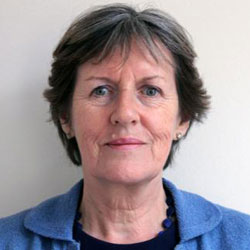
Professor Mary Daly is an Emerita Fellow, Green Templeton College and Professor Emerita of Sociology and Social Policy, Department of Social Policy and Intervention, University of Oxford. She has pioneered work on care at college