
Green Templeton College Student Profile: Leimer Tejeda Frem (MPP)
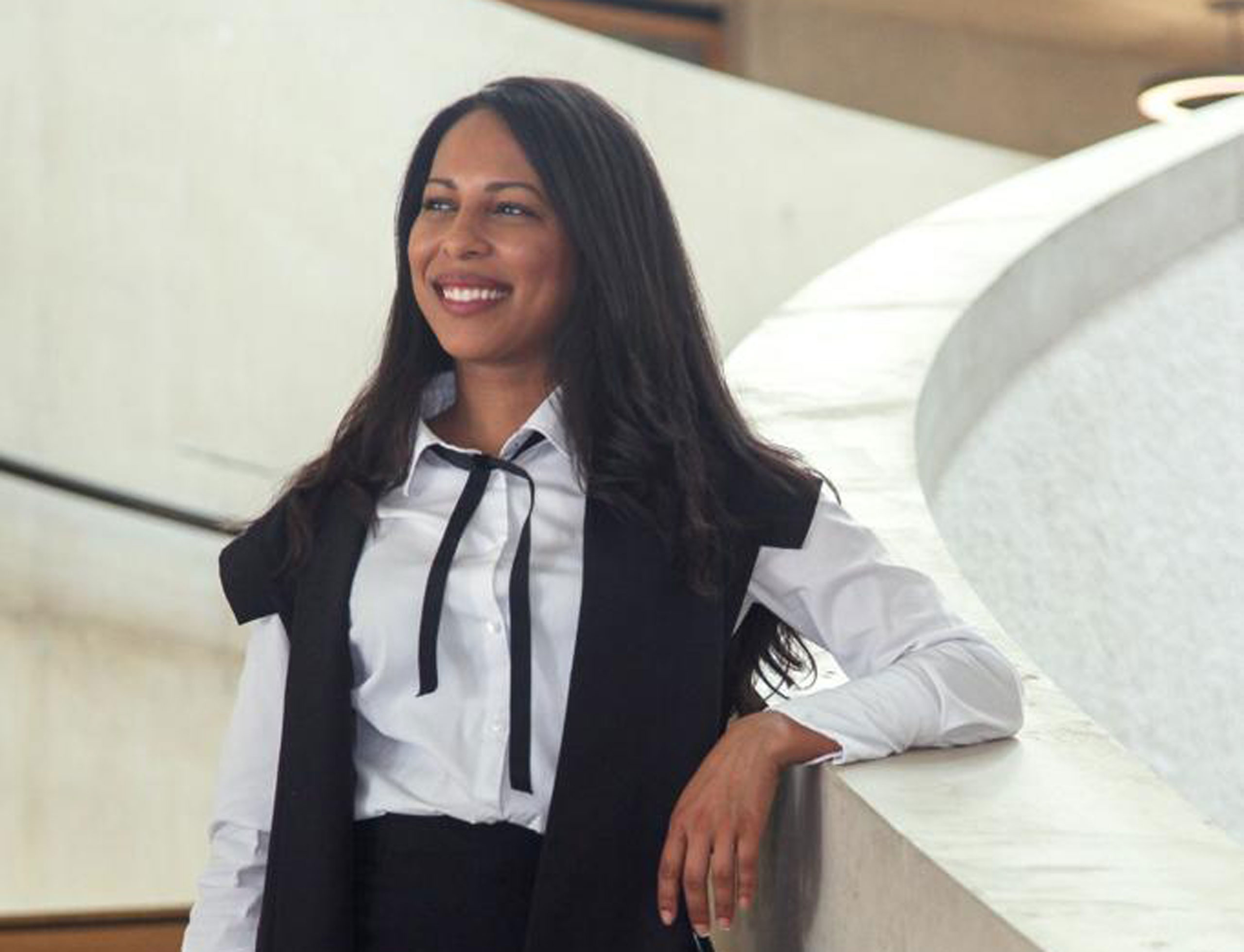
Leimer Tejeda Frem is about to complete her Master of Public Policy (MPP), an intensive one-year taught degree course at the Blavatnik School of Government, University of Oxford. Born in the Dominican Republic, she moved to the United States as a teenager where she finished her secondary education and achieved BAs in International Business and Spanish Literature from the University of Maryland. She also holds an MS in Global Affairs from New York University.
As part of the MPP, Leimer will travel to Bangladesh this summer for a two-month placement with the International Organization for Migration (IOM), the UN Migration Agency for the Rohingya refugee crisis, before starting a Fellowship with the Mission of Dominican Republic on their seat in the United Nations Security Council in New York later this year.
What attracted you to the MPP at Oxford?
I’ve had a long-held dream of studying public policy. After working for nearly seven years at the United Nations Global Compact and three and half years in finance, it seemed like the perfect time to pursue a policy degree that would enable the next step in my career.
I was looking for a programme that would help me become a well-rounded policy maker; one that covered all basic conceptual frameworks of policy-making but that also had applied elements for practitioners. The MPP at Oxford does exactly that.
I visited Oxford last summer and just loved the Blavatnik School’s vision: “a world better led, better served, and better governed.” I also loved the actual Blavatnik School building with transparent governance at the core of its design (and all the sunlight!). Importantly, I feel really at home in international environments and the MPP, I understood, is the most diverse programme at Oxford.
I knew the admissions process is quite rigorous and was honestly very nervous while applying. I received the admission letter a few days before I was expecting them to send it – which happened to be on April Fools’ Day! I thought it was a prank and didn’t tell anyone for days!
How would you describe the structure of the MPP?
I like to think of the MPP as giving you the infrastructure that could be used in understanding and helping solve any policy challenge. It’s a very varied course with core, applied, and options modules.
In Michaelmas, we had philosophy for public policy and economics. In philosophy, for instance, we explored concepts like the role of religion in the state, feminist theories, whether countries should have open borders, amongst others, but importantly it helped us reflect on our moral compass and beliefs.
In Hilary, we had politics for policy-making, evidence for public policy, and a short law course. In politics, for instance, we studied different aspects of national politics such as nationalism, social cleavages, bureaucracies, and transnational governance, exploring them with different case studies from countries like Myanmar, India, Japan, and the United States to name a few.
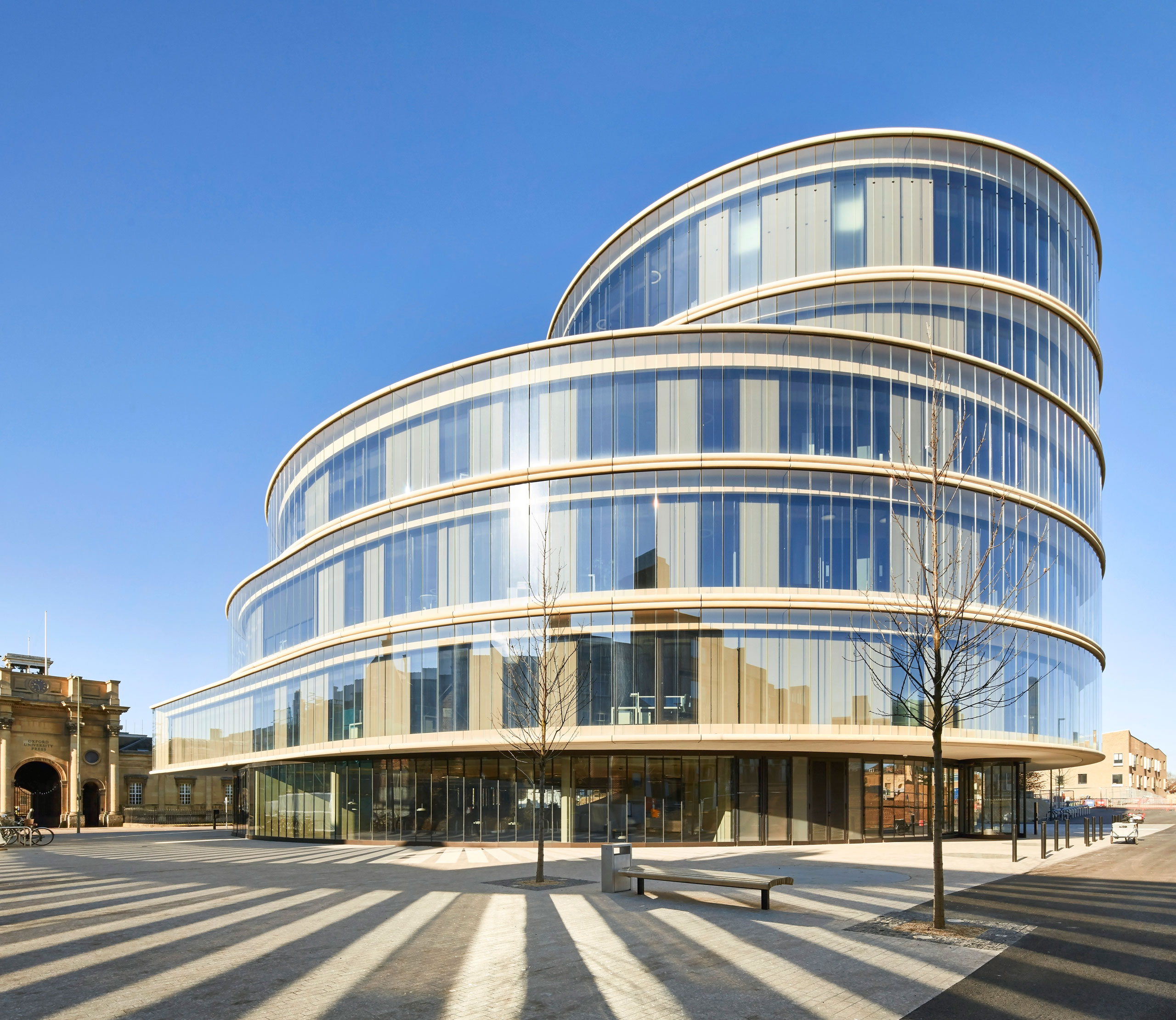
Leimer was inspired by the architecture of the Blavatnik School building (c) Hufton + Crow
Finally, in Trinity term we had the options modules, so I chose two areas that were new to me: energy and education policy. I’m loving them! In between all of the above, we have applied policy modules on topics like public budgeting, negotiations, and communications. The teaching component of the course ends in late June, then we have the summer placement, and graduate in November. I’ll be back for that – somehow, someway!
What will you be doing during your summer placement in Cox’s Bazar, Bangladesh?
This summer I will be working with the International Organization for Migration (IOM), the UN Migration Agency in Cox’s Bazar, now, unfortunately, the largest refugee camp in the world. Since August 2017 approximately 800,000 Rohingya refugees have fled from Rakhine, Myanmar, to Cox’s Bazar, Bangladesh, seeking refuge from persecution, discrimination, and gender-based violence. At the same time, IOM Cox’s Bazar scaled up significantly, situating protection at the centre of humanitarian action.
I will be working with the Protection team, which is particularly robust, working on issues of gender-based violence, child protection, human trafficking, and the prevention of sexual exploitation and abuse within the humanitarian sector. I will be specifically supporting the gender-based violence team in writing a learning report of a pilot project on women’s participation in camp governance as a means to reduce gender-based violence. This will hopefully support future policy and programming in other camps in Cox’s.
I’ve never been to Bangladesh. It will be a steep learning curve which is the main purpose of this placement. I dream of working at the nexus of humanitarian, development, and peace policy, especially in the field, and this will give me an opportunity to get first-hand experience and assess this ambition.
And then you’ll return to New York to take up a Fellowship with the UN Security Council. Why did you seek out that role?
I’m a dual citizen of the Dominican Republic, where I was born, and the United States, where my parents emigrated when I was a teenager. On one hand, I’ve always been curious about working in Government, and on the other, I’m fascinated by – and still very much a student of – international politics. The Security Council is probably purest manifestation of international politics there is, so this Fellowship will offer insights into the Dominican government and a greater understanding of international relations and politics.
This has been a historic year for the Dominican Republic as it is the first time they have a seat on the Council. Knowing that it is a very resource heavy role, I approached the Mission in New York for this opportunity and I was delighted with the positive outcome. I can’t wait to see what the day to day will look like and how the learnings from the MPP can be applied in this setting.
Where do you see your career going in the future?
I see my career as a journey of purpose and learning. Like I mentioned, I dream of working at the nexus of humanitarian, development, and peace. In the short term after graduation, I have a strong interest in policy evaluation, programme management, and partnerships in the humanitarian and peace-building field. While these roles are very niche, I’m quite geographically flexible so hopefully the perfect opportunity will come.
This will probably be my last Masters, but I’m also a continuous learner, so further down the line I dream of doing research. It would be beautiful to return Oxford or the UK, and hopefully there will be an opportunity in the future.
Have you enjoyed your time at Green Templeton?
Absolutely! I didn’t actually know anything about the college system when I was applying so I left my college option open. When I was given the offer of Green Templeton I was very pleased because it’s an all-graduate college and a great place for people who have already been in the workplace or have families. It’s a very popular college for the MPP, there are about 15 of us here, and it’s been wonderful.
I like to think of Green Templeton as my home away from home and as my support system in Oxford. Every single person here has shown an interest in my success and wellbeing. From the porters’ lodge and finance teams, to the college nurse, librarian and my adviser, there’s always someone at Green Templeton I can ask for help. Oh, and the rumour is true, Green Templeton truly has the best food out of any Oxford college. Trust me!
If you’re coming from a work background or have a family, this is the college for you! Don’t be intimidated by Oxford.
What has been a highlight of your time at Green Templeton?
I’ve just loved Green Templeton! One thing I really appreciate is the extra help that’s offered to students. We had a statistics module on the MPP for three days. I found myself needing help with this course and so I reached out to Green Templeton for assistance. I found out there is an in-house statistician, Dr Coral Milburn-Curtis, at college who was happy to conduct several sessions with me to help me fully learn the topics covered in the course. We even worked beyond the three days of the course. The college was so prompt at responding to my query and the sessions were incredibly helpful. I really appreciated how invested the college and Dr Milburn-Curtis were in helping me succeed.
If would like to feature in a Student Profile please contact communications@gtc.ox.ac.uk.
Happy Friday!
We are ready and excited for a busy Michaelmas Term ahead.


Get ready for a discussion on leadership, diplomacy, philanthropy and Olympic sport. Plus a live fencing demonstration.🤺
On 28 October, we are bringing together four extraordinary women from the United States, United Kingdom and Pan-American sporting communities for the event: Bridging Nations, Leading Change.
The conversation will explore how sport can create change across borders, from women’s leadership and philanthropy to sports diplomacy and the Olympic movement.
With a welcome from Chief Executive of @TeamGB Jon Dutton OBE , alumna Selina Kaing (MBA, 2006) will moderate the panel`s discussion featuring:
🌎 Ana Irene Delgado, Permanent Representative of Panama to the Organization of American States
🏅 Sally Munday, Chief Executive of @UKSport
🤺 Georgina Usher MBE, Chief Executive of @BritishFencing
To register, go to the link in the comments
#GreenTempletonCollege #Oxford #WomenInLeadership #SportDiplomacy #Fencing #OlympicMovement #WomenInSport #OxfordEvents

Although we can not guarantee his attendance, Vincent encourages all new students to attend the college life fairs, taking place today from 14:00 to 15:30 in the marquee and Thursday 8 October from 10:30 to 12:00!
Meet college staff and representatives from student clubs!

The college is delighted to welcome a new Oxford PharmaGenesis DPhil Scholarship in Translational Health.
The scholarship has been established through an endowment gift of £1,660,000 from Oxford PharmaGenesis, now part of the Klick family, creating a permanent fund to support doctoral students undertaking outstanding postgraduate research in the field of translational health at Nuffield Department of Primary Care @oxford_uni

Yesterday our alumni celebrated the 2026 Mid-Autumn Festival in Hong Kong alongside @st_annescollege alumni at the two societies’ first co-organised event.
The group gathered at a Michelin-starred restaurant to mark the joyful occasion, make new connections and enjoy exquisite traditional food together.
It is wonderful to see the two college alumni societies bringing the wider Oxford community together for what Nathaniel Chan (MBA, 2016), co-chair of the Green Templeton College Hong Kong Alumni Society, described as ‘a memorable occasion’.
Plans are already taking shape for a hike and karaoke event in November, following an ‘impressive impromptu a cappella performance by one alumnus’ at the lunch.
#alumni
#Oxford
#HongKong


