Gender Health Equity Collective launch
The Gender Health Equity Collective is a new initiative to bring together researchers and advocates doing work on gender and health. Thanks to support from the Annual Fund it will provide resources to support and uplift feminist health research in collaboration with Medical Herstory. The collective hosted a launch event led by Tori Ford (DPhil Primary Health Care, 2021) in college in November 2022.
Tori Ford reflects on the launch and shares the aspirations of the collective.
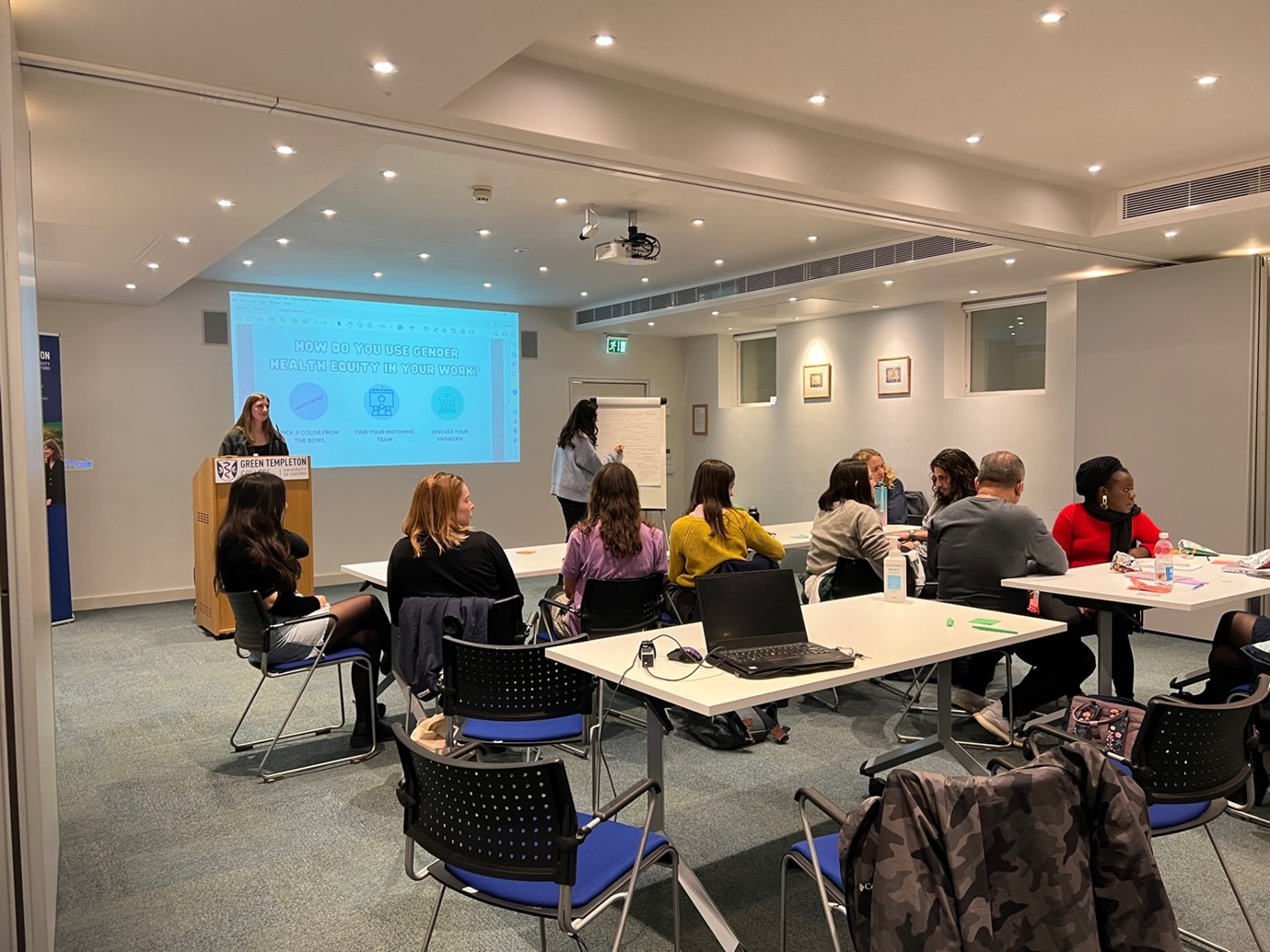
The Gender Health Equity Collective launch party was a great success as scholars from across the university came together to discuss the current challenges and opportunities surrounding feminist health research and advocacy. Participants joined in a capacity-building workshop designed to explore various perspectives, unify efforts, and set priorities around gender health equity.
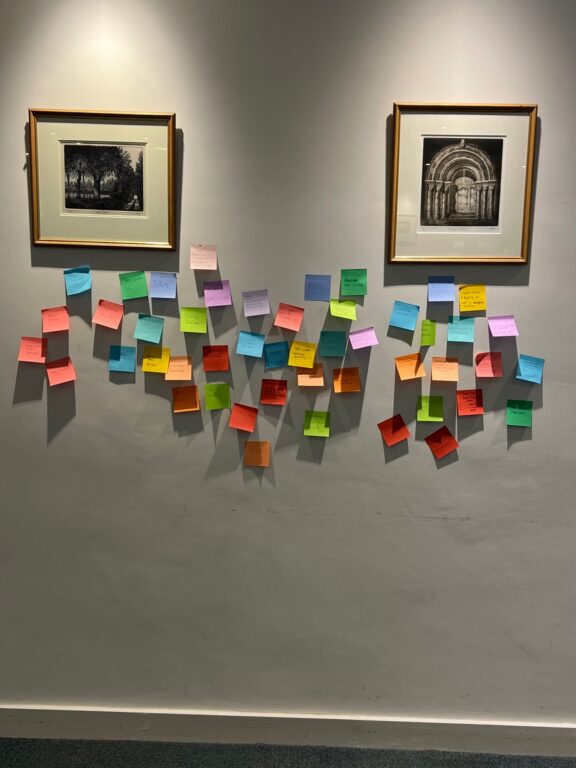
The event began with an interactive activity for participants to introduce themselves, their current roles, and their research interests. Each participant was given sticky notes which they completed with their information and put up on a wall, overlapping any commonalities they shared with other attendees. This provided a visual roadmap of who was in attendance and what everyone was bringing to the discussion.
Participants who attended the launch were from disciplines including journalism, documentary filmmaking, business, psychology, and medicine. The attendees also varied in career stage and included everyone from undergraduates to graduate students and fellows. Shared interests included trans and non-binary health experiences, black health disparities, reproductive health, menstruation, overcoming stigma, and gender health equity.
Medical Herstory advances gender health equity through storytelling, medical education, patient advocacy, and undoing stigma. The organisation currently supports research projects by assisting with participant recruitment, gathering patient representatives, partnering on grant applications, and disseminating findings through media campaigns.
 Other collaboration opportunities include creating custom events focused on storytelling, workshops aimed at healthcare providers or patients, creating resource packs and infographics, and participating in an annual Feminist Health Conference.
The attendees split off into small groups to discuss how they currently examine gender health equity in their own work, and how they plan to in the future. Some participants were new to the field and eager to learn, while others had experience examining sexism, racism, ableism, and transphobia in healthcare. The group then brainstormed how it could work together to advance gender health equity. Initiatives included creating an inclusive language guide for medical researchers, developing training for researchers working on sensitive topics, writing and publishing together, working with policy makers, and creating a database of people interested in sharing their lived experience for research or journalism. These ideas were placed on sticky notes and created a visual display.
The launch party closed with a commitment to collaborate on working towards the goals laid out at the event with the support of Medical Herstory. Participants then enjoyed informal networking at the Stables Bar where they continued exploring common interests in advancing gender health equity.