HEXI Conferences
HEXI’s conferences and summits represented the joint endeavours of its partners and associates to engage the wider community in conversations about the most recent developments in understanding patient experiences.
International Learning Collaborative
13 to 15 June 2016
Green Templeton College
View programme for ‘International Learning Collaborative’ (PDF)
The International Learning Collaborative was founded in 2008 and is a member-based organisation of international academics, clinicians and leaders. Its goal is to transform the way in which care is delivered in high tech environments and to elevate the standard of fundamental care globally.
Since 2012 the ILC has hosted a three-day event that brings together international, multidisciplinary healthcare experts and offers a forum for critical dialogue and discussion and the generation of international collaborations relating to the research, education, practice and policy of high-quality fundamental care.
The 2016 event was hosted at Green Templeton College with the theme: “How can we better translate the evidence of the fundamentals of care into practice?” The aim was to explore innovative strategies for how we could harness, synthesise and operationalise evidence in order to transform the way in which fundamental care is delivered.
HEXI Summit – Designing future healthcare: reconceptualising health literacy for the 21st century
22 to 24 March 2016
Ditchley Park
View programme for HEXI summit (PDF)
Sustainable healthcare in the 21st century depends on patients being actively engaged in maintaining their health, in managing the illnesses that affect them and in designing and delivering healthcare systems. The population is ageing and the number of people with at least one long-term illness is increasing. In the UK, this is highlighted by the facts that 70% of healthcare spend is on long-term conditions, that there will be a 31% growth in the number of people of state pension age over the next 25 years and the number of people over 80 will more than double, from 3 million in 2012 to 6.1m in 2037.

These changes in demography and burden of disease put increasing pressure on the NHS and other healthcare systems. Alongside this there are also increasing pressures on budgets from the impact of higher expectations of care and rises in the relative prices of healthcare inputs (principally staffing). In the NHS, these pressures will result in a potential funding gap of £30 billion by 2020/21. The OECD estimates that this need for increased spend is shared by all the other EU-15 countries which will have increased the proportion of GDP they spend on the public provision of health by between 1.9% and 7.9% by 2060.
Part of the response to these challenges is the need to support people not to become ill in the first place and support them to manage their illnesses when they do. To achieve this we need informed patients, professionals that can engage with patients as partners, and person-centred healthcare systems that respond to what patients need and say. The 2002 Wanless Report on the future funding of UK healthcare made population engagement in health a fundamental variable in controlling the inevitable need to increase healthcare spending. Similarly, NHS England’s Five Year Forward Plan emphasises the health and wellbeing gap and the need to focus on prevention as being essential to a sustainable system and a continued rise in healthy years into old age.
The capacity for individuals to obtain, understand and act on health information and access services to support their health and wellbeing, sometimes referred to as health literacy, is fundamental to achieving population engagement in health. Historically, health literacy has focused on individuals’ capacity, however, more recent approaches emphasise the complex interdependencies between health understanding, health attitudes and behaviours, social determinants of health and the design and delivery of health services. This broader systems approach to health literacy encompasses action across a wide spectrum of policy, managerial and clinical activity and action across a range of sectors:
- Population educational interventions – for example schools programme on health and personal welfare or training in thinking and processing skills
- E-health – supporting patients and the public to access information relevant to their needs, for example through health information sites such as NHS Choices or through access to their health records
- The clinical encounter – the way in which clinicians interact with patients to understand what matters to individual patients and to support informed decision making as desired by the individual, using, for example, health coaching techniques or decision aids
- The design of healthcare environments – making systems and facilities seem safe and approachable, more easily accessible and usable
- Heath policy initiatives designed to structurally reduce health inequalities.
Health literacy is known to be less well developed in those with greatest health needs, particularly the elderly, those with multiple morbidity and those in the lowest socioeconomic groups. The majority of health literacy research and action has been focused in the US. The Summit aimed to generate discussion and action in the UK by focusing on a number of key questions:
- What are the most pressing issues regarding health literacy and health equity today?
- Can health literacy be improved? If so, how?
- At what level would interventions operate: individual, community, health system, national?
- What sectors should these solutions involve (education, health, social care, others)?
- How can health literacy be used to reduce health inequalities amongst those in the lowest socioeconomic positions?
International Learning Collaborative Summit
15 August 2014
Oxford Brookes University and Green Templeton College
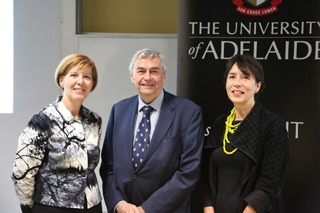 Hosted by Oxford Brookes University and Green Templeton College in Oxford, United Kingdom the 2014 theme was: “Leadership for Practical Action around the Fundamentals of Care”.
The 2014 ILC Summit was officially opened by Sir David Watson, former Principal of Green Templeton College. In his opening address, Sir David reflected upon the important role an Oxford College can play in enabling and encouraging debate around the complex problems of contemporary society. He challenged the delegates to think about the meaning of care in contemporary society and how a group such as the ILC could begin to shape some of the emerging debates.
The patients’ perspective on the fundamentals of care: international seminar
18 to 19 June 2012
Green Templeton College
 Patients’ perspectives on the fundamentals of care, defined here as the basic care tasks that patients experience on the ward such as washing, eating and drinking, toileting, and taking medication, were the focus of this international seminar that was hosted jointly by the International Learning Collaborative led by Professor Alison Kitson from the University of Adelaide, a Green Templeton College Research Fellow, and HEXI. Participants included nursing and social science researchers from the UK, Sweden, USA, Canada, Singapore, and Australia, as well as practising nurse leaders and educators, representatives of the Royal College of Nursing and the Chief Executive of The Patients’ Association. Delegates heard a range of national and international research perspectives on the role of nurses, patient experience of ward care (using patient interviews on stroke from Healthtalkonline), and the relationship between staff morale and patient experience.
Discussions focused on the need for action to address problems already uncovered by research. A highlight of the seminar was listening over dinner to David Festenstein’s story of his own experience of recovering from a stroke in 2008. After all the thinking and debate of the day, David brought everything back to the real essence of high quality care: to focus on the person in front of you. David’s talk has been filmed and is available to watch on YouTube in four parts.
HEXI Conference 2011 – Do we know what patients want? Understanding and using patient experience
 22 March 2011
St Hugh’s College
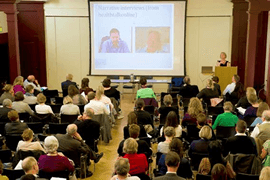
The HEXI conference in March 2011 hosted over a hundred delegates. The day, chaired by Dr Phil Hammond, focused on exploring, measuring and understanding how to use patient experience and had excellent feedback. It attracted participants ranging from policy makers in the Department of Health and Scottish Parliament to senior managers and directors of NHS organisations, patient groups and the academic environment from the UK & Europe. In May 2013, Oxford University Press published Understanding and Using Health Experiences: Improving Patient Care, a collaborative work arising directly from this conference’s proceedings.


EP Abraham Lecture Theatre
This is a modern lecture theatre located in the Walton Building within Green Templeton’s main grounds.

Barclay Room
A modern meeting room located just off the Lankester Quad within Green Templeton’s main college site.

Kawasaki Room
An elegant meeting or seminar room located within Green Templeton’s main college site, with views overlooking the gardens.

Radcliffe Observatory
The 18th Century Radcliffe Observatory, featuring the iconic Tower of the Winds, is at the heart of the college site.

Dining
Green Templeton College’s catering team is renowned for superb food made from quality ingredients, presented with care and artistic flair.

For All Booking Queries:
Terms and conditions for venue hire (B2B)
Terms and conditions for venue hire (consumer)
For any questions about bookings or to discuss your venue needs, please contact: events@gtc.ox.ac.uk